

FG Bets on Reforms, New Investments and Improved Security to Raise Crude Output and Strengthen Nigeria’s Energy Sector.
Enugu Media Village (EMV), the Most Updated Online News Platform | September 5, 2026.
The Federal Government has reaffirmed its ambition to increase Nigeria’s crude oil production to 3 million barrels per day by 2030, as ongoing reforms and fresh investments in the petroleum sector seek to reverse years of declining output and strengthen the country’s position in the global energy market.
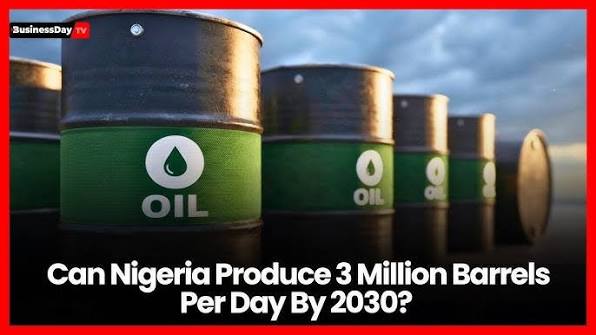
The target was recently reinforced by the Federal Government, which said deliberate measures are being implemented to expand production capacity, improve infrastructure and create a more attractive environment for investors.
The renewed production ambition comes amid signs of recovery in Nigeria’s oil sector. According to recent economic data, crude oil production increased to about 1.72 million barrels per day in the second quarter of 2026, up from 1.55 million barrels per day in the previous quarter. The improvement contributed to Nigeria’s 4.43 per cent year-on-year economic growth recorded during the period.
The Federal Government’s strategy includes regulatory reforms, increased drilling activities, improved security around oil-producing assets, infrastructure development and efforts to attract both domestic and international capital into the upstream sector.
The Nigerian Upstream Petroleum Regulatory Commission (NUPRC) has also identified increased production and revenue expansion as key priorities, with the regulator targeting 2 million barrels per day by 2027 and 3 million barrels per day by 2030.
Investment remains central to achieving the ambitious target. The government has been seeking billions of dollars in fresh investment, while new licensing rounds and offshore developments are expected to add significant production capacity. The NUPRC has projected that numerous offshore projects could commence production before 2030, potentially attracting substantial investment into Nigeria’s oil and gas industry.
However, industry stakeholders have cautioned that achieving 3 million barrels per day will require sustained investment, increased drilling and better utilisation of existing technical capacity. The Petroleum Technology Association of Nigeria has warned that funding gaps and underutilised capacity could undermine the target if not adequately addressed.
Beyond crude production, Nigeria is simultaneously expanding its domestic refining capacity. The country has expressed an ambition to increasingly direct locally produced crude toward domestic refineries, reducing dependence on imported petroleum products and strengthening energy security.
The International Energy Agency has also expressed optimism about Nigeria’s energy prospects, with IEA chief Fatih Birol saying the country could potentially double energy investment within five years. Nigeria’s recent association with the IEA is expected to deepen technical cooperation and improve its ability to attract investment across oil, gas, electricity and renewable energy.
If successfully implemented, the 3-million-barrel target could significantly increase government revenues, boost foreign exchange earnings, create jobs and support broader economic development. It could also strengthen Nigeria’s influence in the international energy market.
For the target to become reality, however, sustained policy consistency, investor confidence, infrastructure development and effective measures against oil theft and production losses will remain critical.
Enugu Media Village (EMV), the Most Updated Online News Platform, continues to monitor major developments shaping Nigeria’s economy, energy sector and national development agenda.