
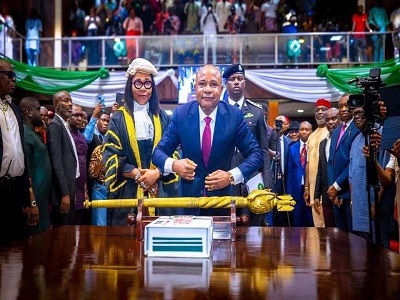
Lawmakers Support Proposed Security Reform as Further Constitutional Approvals Remain Necessary.
Enugu Media Village (EMV), the Most Updated Online News Platform — 27 October 2026.
THE ENUGU State House of Assembly has reportedly backed the proposed constitutional amendment to establish State Police in Nigeria, adding its voice to the ongoing national debate on decentralising policing and strengthening security across the country.
The development comes amid continuing calls for reforms to Nigeria’s security architecture, particularly as states and communities seek more effective responses to kidnapping, armed robbery, communal violence and other criminal activities.
The proposed amendment seeks to provide a constitutional framework for state-level policing, potentially allowing states to establish police structures that would complement the existing federal policing system.
What State Police Could Mean for Enugu
For Enugu State, the establishment of State Police could create opportunities for security arrangements that are more responsive to local conditions, community concerns and emerging threats.
Supporters of decentralised policing argue that officers operating closer to the communities they serve may be better positioned to gather local intelligence, identify security risks and respond more quickly to incidents.
A state-level police structure could also provide additional capacity for crime prevention, neighbourhood patrols and collaboration with traditional institutions, community leaders and other security agencies.
However, these potential benefits would depend on the design of the proposed system, the quality of recruitment and training, adequate funding, effective coordination with federal security agencies and strong accountability mechanisms.
Constitutional Approval Still Required
The reported endorsement by the Enugu State House of Assembly should not be interpreted as the establishment of State Police in the state.
Under Section 9 of the 1999 Constitution of the Federal Republic of Nigeria, constitutional alterations generally require approval by at least two-thirds of all members of each House of the National Assembly, followed by resolutions supporting the alteration from the Houses of Assembly of at least two-thirds of the states of the federation, subject to the applicable constitutional requirements.
Consequently, the relevant legislative approvals and completion of the constitutional amendment process remain necessary before State Police can be established under the proposed framework.
The exact status of the proposed amendment, including the legislative stages already completed, should be confirmed through official records of the National Assembly and the relevant state legislatures.
Safeguards Will Be Critical
Beyond the question of constitutional approval, the implementation of State Police would raise important questions about operational independence, funding, recruitment, jurisdiction and accountability.
A credible framework would need safeguards against political interference, unlawful detention, abuse of power and the use of security institutions to intimidate political opponents or suppress lawful civic participation.
Clear rules governing cooperation between federal and state police, independent complaint mechanisms, professional training and respect for fundamental human rights would also be important.
These safeguards would help ensure that any decentralised policing arrangement serves the public interest and operates within the law.
What Ndi Enugu Should Watch
As discussions on State Police continue, residents and stakeholders in Enugu State will be interested in the final constitutional provisions, the powers assigned to state authorities, funding arrangements and the mechanisms for monitoring police conduct.
The central question is how the proposed reform would improve public safety while protecting citizens’ rights and maintaining effective coordination across Nigeria’s security institutions.
The reported position of the Enugu Assembly represents a development in the legislative debate. Its practical implications, however, will depend on the completion of the constitutional process and the details of any eventual implementation framework.
Enugu Media Village (EMV) — Informing Enugu, Connecting the World. Promoting Accountability, Public Participation, Transparency and Good Governance.