Enugu Media Village (EMV), the Most Updated Online News Platform.
Monday, October 12, 2026.
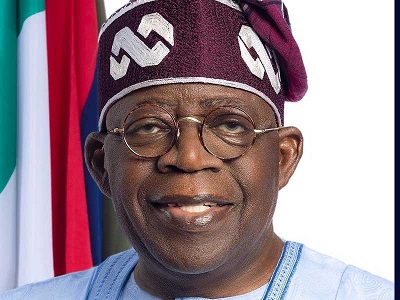
PRESIDENT Bola Ahmed Tinubu has welcomed the World Bank’s October 2026 Nigeria Development Update, saying its findings indicate that the Federal Government’s economic reforms are beginning to deliver measurable results and strengthen the country’s prospects for sustained economic growth.
The report, titled “Beyond the Federal Purse: How Higher Revenues Reshaped State Priorities,” highlights improvements in Nigeria’s economic performance, public revenue generation and external financial position. However, it also underscores the need to translate these gains into better living conditions, employment opportunities and improved public services for Nigerians.
According to the World Bank, Nigeria’s economy grew by 4.2 per cent in the first half of 2026, compared with 3.9 per cent during the corresponding period of 2025. The institution projects that economic growth will average at least 4.4 per cent between 2026 and 2028.
Rising Revenue and Improved External Reserves
The report identifies increased government revenue as one of the significant outcomes of the economic reforms introduced since 2023.
Federation revenues increased by 69 per cent in real terms between 2023 and 2025, with state governments emerging as the largest beneficiaries. The additional resources provided state governments with greater fiscal space to invest in infrastructure and other development priorities.
Nigeria’s external financial position also strengthened, with gross external reserves rising from $45.5 billion at the end of 2025 to $53.8 billion at the end of August 2026.
The country’s current account surplus increased to $12 billion in the first half of 2026, compared with $8.6 billion recorded during the same period in 2025.
The World Bank further projected that Nigeria’s overall public debt would decline from 40 per cent of Gross Domestic Product (GDP) in 2025 to 38.1 per cent in 2026.
States Urged to Prioritise Development
President Tinubu called on state governments to deploy their increased revenue more prudently, prioritising projects that directly improve the living standards of citizens.
The World Bank report indicates that state governments expanded capital expenditure by 151 per cent in real terms between 2023 and 2025. Much of the additional spending went into roads and transportation, agriculture, energy and housing.
The report also found that internally generated revenue increased in real terms in 31 of 35 states assessed, while 21 states reduced their debt-to-GDP ratios between 2021 and 2025.
The findings present an opportunity for state governments to strengthen infrastructure, expand economic activities, improve public services and create an enabling environment for private-sector investment.
Poverty Reduction Remains a Major Challenge
Despite the positive economic indicators, the World Bank stressed that economic stability must translate into tangible benefits for households.
The report indicates that Nigeria’s poverty rate stabilised for the first time since 2019, while projecting a gradual decline as economic growth outpaces population growth.
President Tinubu acknowledged that more work remains to ensure that the benefits of economic reforms reach ordinary Nigerians, particularly through lower food prices, decent employment opportunities and improved access to essential services.
He also reaffirmed his administration’s commitment to expanding targeted cash transfers, accelerating the deployment of Compressed Natural Gas (CNG), improving agricultural productivity and strengthening access to affordable healthcare and quality education.
The President said the administration would sustain its reform agenda under the Renewed Hope Agenda, with a renewed focus on inclusive growth and shared prosperity.
Economic Progress Must Reflect in Citizens’ Lives
The World Bank’s latest assessment presents a mixed but improving picture of Nigeria’s economy. While growth, revenue generation and external reserves have strengthened, the challenge remains to ensure that these improvements translate into higher purchasing power, sustainable employment and reduced poverty.
For Nigeria to achieve more inclusive development, analysts and policymakers will need to pay attention not only to macroeconomic indicators but also to the quality of public expenditure, accountability in government spending and the effectiveness of social protection programmes.
The coming years will therefore be critical in determining whether the economic reforms can deliver lasting improvements in the welfare of Nigerians across all states and local government areas.
Source: State House, Abuja; World Bank, October 2026 Nigeria Development Update.
Enugu Media Village (EMV), the Most Updated Online News Platform, remains committed to promoting accountability, public participation, transparency and good governance through timely and credible reporting.
Informing Enugu, Connecting the World.