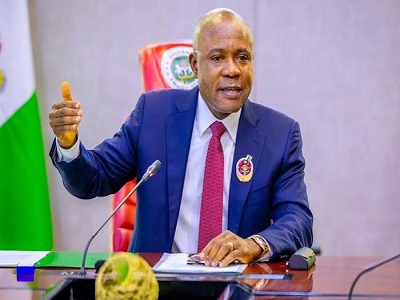
As Enugu undergoes sweeping infrastructure and governance reforms, growing political mobilisation around Governor Peter Mbah’s second-term bid is adding a new dimension to the state’s rapidly evolving public conversation.
Enugu Media Village (EMV), the Most Updated Online News Platform | September 3, 2026.
ENUGU — Enugu State is increasingly becoming a focal point of intense public discussion as the administration of Governor Peter Ndubuisi Mbah pushes ahead with an ambitious development agenda while political activities ahead of the 2027 governorship election continue to gather momentum.
Across the state, conversations surrounding infrastructure, education, healthcare, transportation, digital transformation, investment, security and economic development are increasingly intertwined with questions about the political future of the administration.
Governor Mbah’s development programme has placed large-scale infrastructure projects at the centre of his administration’s agenda. Among projects highlighted in recent assessments are the dualisation of the Enugu–Opi–Nsukka Road, the 102 Smart Green Schools, Type-2 Primary Healthcare Centres, the SUMAS Teaching Hospital and various urban and rural link roads.
The administration has also outlined plans for further expansion of Enugu’s transportation infrastructure, including a proposed monorail and intercity rail system as part of a broader vision to develop Enugu into a modern, multimodal city.
Beyond physical infrastructure, the Mbah administration has continued to emphasise economic expansion and human-capital development, with its wider vision including efforts to grow the state’s economy significantly and attract greater investment.
2027 Politics Takes Centre Stage
While development remains a dominant subject of discussion, the approaching 2027 election has inevitably shifted attention toward the political landscape.
Governor Mbah’s re-election bid has attracted endorsements and mobilisation from various groups and political stakeholders across the state. In recent weeks, former elected local government chairmen declared support for his second-term ambition, while the Progressives Erstwhile Ward Executives (PEWEX) also endorsed his re-election bid and backed the principle of zonal rotation.
A grassroots mobilisation structure, G-17 for Peter Mbah, has also conducted activities across all 17 local government areas, culminating in a major gathering in Nkanu East. The group inaugurated structures covering the LGAs, wards and polling units as part of its mobilisation efforts.
Earlier in the year, political stakeholders from Enugu West presented a ₦100 million cheque toward Governor Mbah’s governorship nomination form, while other groups and local government leaders have publicly expressed support for his return in 2027.
The state’s traditional rulers have also endorsed Mbah for a second term, further adding to the growing political conversation surrounding the 2027 contest.
Development Versus Politics
For many observers, the emerging political contest will increasingly be shaped by the record of governance delivered before the election.
Governor Mbah himself has repeatedly framed his administration’s performance as the principal basis upon which his leadership should be judged, putting infrastructure delivery and measurable development outcomes at the heart of the political narrative.
At the same time, opposition voices and political actors critical of the administration continue to scrutinise its policies, implementation and political strategy. This has created a more competitive political environment as different interests position themselves ahead of 2027.
The political significance of Enugu’s development agenda has therefore become difficult to separate from the approaching election.
Projects that were initially viewed primarily through the lens of public service delivery are now also being examined for their potential impact on voters’ perceptions of the administration.
A New Political Era for Enugu?
Another major factor shaping the state’s political conversation is Governor Mbah’s movement from the Peoples Democratic Party (PDP) to the All Progressives Congress (APC), which has altered the political configuration in Enugu and strengthened the governor’s relationship with the Federal Government.
In April, Mbah led political leaders from Enugu to the Presidential Villa, where they pledged support for President Bola Ahmed Tinubu’s 2027 re-election bid. (Premium Times Nigeria)
The alignment has introduced a broader national dimension to Enugu’s 2027 political calculations, particularly around the relationship between state-level development, federal cooperation and the South-East’s place within national politics.
The Road to 2027
With more than a year still remaining before the 2027 general elections, Enugu’s political landscape is already active.
For the ruling political structure, the challenge will be to sustain the momentum of development while translating public approval into durable political support.
For opposition forces, the task will be to convince voters that they offer a credible alternative and to build structures capable of competing effectively across the state’s political landscape.
Ultimately, the 2027 contest is likely to be influenced not only by party structures and political alliances but also by how Ndi Enugu assess the tangible impact of government policies on their daily lives.
As roads, schools, hospitals, water projects, transportation systems, digital initiatives and economic programmes continue to reshape the state’s development narrative, Enugu appears to be entering a critical phase where governance performance and political competition are becoming increasingly inseparable.
The coming months are therefore expected to witness heightened political mobilisation, sharper public debate and increased scrutiny of the Mbah administration as stakeholders prepare for what promises to be a consequential 2027 governorship contest.
Enugu Media Village (EMV), the Most Updated Online News Platform, will continue to monitor the political, economic and developmental developments shaping Enugu State and provide Ndi Enugu with timely, balanced and relevant reports as the state moves toward 2027.