
Meet Mama Nkechi — One of Many Enugu Traders Embracing Digital Payments and Smart Tools
Enugu Media Village | 22nd August, 2026
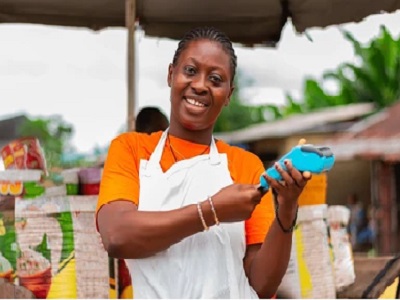
ENUGU, NIGERIA — Before the first wave of customers arrives at Ogbete Main Market each morning, Mama Nkechi is already at her stall, preparing for another busy day of buying, selling, receiving payments and attending to customers.
But unlike the traditional image of a market trader who relies almost entirely on cash transactions and handwritten records, Mama Nkechi has embraced technology as an important part of running her business.
From her Point-of-Sale (POS) terminal to mobile banking applications and digital communication with customers, technology has become part of her everyday business routine.
Her story reflects a broader shift taking place across Enugu’s commercial landscape, where traders are increasingly adopting digital tools to make transactions faster, improve record-keeping, reach customers and manage their businesses more efficiently.
From Cash and Paper to Digital Payments
For many years, cash was the dominant means of payment in markets across Nigeria. Traders had to deal with the challenges of handling large amounts of cash, finding change, keeping handwritten records and managing the risks associated with carrying money.
Today, the situation is changing.
With her POS terminal, Mama Nkechi can receive payments from customers who may not have enough cash on hand. A customer can simply make a transfer or use a bank card, receive confirmation and complete the purchase.
For the trader, the benefit goes beyond convenience.
Digital transactions create records that can help her keep track of daily sales and understand how much money is moving through the business.
“Before, everything was cash. Now, many of my customers prefer to transfer or use POS. It makes things easier, especially when someone does not have cash,” Mama Nkechi explains.
Her experience illustrates how seemingly simple technologies can make a meaningful difference in the daily lives of small-business owners.
A Smartphone Has Become Part of the Business
For Mama Nkechi, the smartphone is no longer simply a device for making calls and chatting with family and friends.
It has become a business tool. She uses her phone to communicate with customers, confirm payments, check bank alerts, contact suppliers and stay connected to the wider market.
Through messaging platforms and social media, traders can also showcase their products beyond the physical boundaries of their stalls.
A customer who has previously bought from her can contact her from home, ask about available products, negotiate prices and arrange collection or delivery.
This creates an important advantage: the business does not completely stop when the market closes.
Technology Is Helping Traders Understand Their Businesses
One of the less visible benefits of digitalization is improved business management.
Traditional market trading often involves informal records, memory and handwritten notebooks. While these methods can work, digital tools provide traders with additional ways to monitor their income and expenses.
For traders who consistently record their transactions, technology can help answer important questions:
What products sell the fastest? Which days bring the most customers? How much is being spent on restocking? How much profit is being generated?
These are simple questions, but the answers can make a significant difference when a trader is trying to grow.
For Mama Nkechi, the goal is no longer simply to sell enough goods to return home with cash at the end of the day. She is gradually thinking more like a business owner — monitoring transactions, understanding customers and planning for expansion.
The New Face of the Enugu Trader
Mama Nkechi is not alone. Across Ogbete Main Market and other commercial centres in Enugu, more traders are becoming familiar with POS terminals, bank transfers, mobile banking, digital marketing and other technology-driven services.
This emerging trend is particularly significant for small and medium-sized businesses, which form an important part of the state’s commercial economy.
Digital payments can reduce dependence on physical cash, while smartphones and online platforms can give traders access to customers outside their immediate neighbourhoods.
The result is a gradual transformation in how business is conducted.
The traditional market stall is increasingly becoming a point within a larger digital business network.
Convenience for Customers
The adoption of digital payments also benefits customers. A shopper may arrive at the market without enough cash but still be able to complete a transaction. Another customer may prefer bank transfer because it provides a digital record of payment.
For younger consumers who are accustomed to cashless transactions, the availability of POS and transfer options can make shopping more convenient.
This is particularly important as Nigeria continues to experience a broader transition toward digital financial services.
Technology and Women’s Economic Empowerment
Stories such as Mama Nkechi’s also highlight the role technology can play in supporting women entrepreneurs.
Women constitute a significant part of Nigeria’s informal and small-business economy. Access to digital financial tools can give female traders greater control over their transactions, improve their ability to monitor business performance and potentially open doors to new markets.
For a market woman who has spent years building a business from a small stall, adopting technology can be a major step toward formalizing and expanding that enterprise.
The journey may begin with a POS machine or smartphone, but the possibilities can extend much further.
Challenges Still Remain
Despite the progress, digital adoption does not come without challenges. Network interruptions, transaction delays, service charges, power supply issues, fraud concerns and limited digital literacy can sometimes make electronic transactions difficult.
This is why continued education and awareness are important.
Traders need to understand how to protect their transaction details, verify payment alerts, identify fraudulent messages and use digital financial services responsibly.
Financial institutions, technology providers and relevant public agencies also have a role to play in ensuring that digital tools remain accessible, reliable and secure for small businesses.
From Ogbete to a Digital Enugu
The story of Mama Nkechi is bigger than one trader and one POS machine. It is a glimpse into the changing face of commerce in Enugu. Ogbete Main Market has long been one of the defining commercial centres of the Coal City. Today, its traders are increasingly combining the traditional strength of face-to-face commerce with the possibilities offered by modern technology. The transformation may not always make headlines.
It can be seen in a trader checking a bank alert on her phone, a customer paying by transfer, a business owner communicating with customers online or a small enterprise keeping better records of its daily transactions.
These small changes collectively represent a larger movement toward a more connected and digitally enabled business environment.
Enugu Media Village: Documenting the People Behind the Transformation
At Enugu Media Village, we believe development is best understood through the stories of the people experiencing it.
Mama Nkechi’s story is a reminder that technology is not only about sophisticated applications, large corporations or major technology companies.
Sometimes, it is about a market woman in Ogbete Main Market using a smartphone and POS terminal to serve her customers better, keep her business running and build a more secure future.
Her experience reflects the resilience, adaptability and entrepreneurial spirit of Enugu’s traders.
As digital technology continues to reshape commerce, stories like hers demonstrate that the future of business is not somewhere far away.
It is already happening — one transaction, one customer and one market stall at a time.
— ENUGU MEDIA VILLAGE