
Landmark Medical Breakthrough Connects Surgeons in Ogun to Kidney Cancer Patient in Abuja.
Enugu Media Village (EMV), the Most Updated Online News Platform | September 22, 2026.
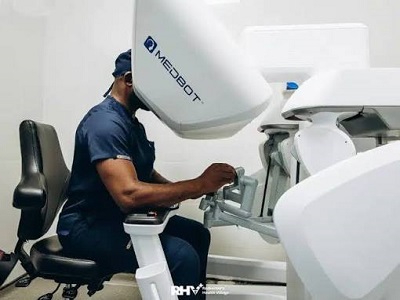
Nigeria has recorded a major milestone in advanced healthcare delivery following the successful performance of what Redeemer’s Health Village (RHV) described as West Africa’s first telerobotic surgery, with surgeons in Ogun State remotely operating on a patient approximately 500 kilometres away in Abuja.
The landmark procedure was carried out in collaboration with RoboMed Global and Nisa Premier Hospital, Abuja, demonstrating how robotic technology, telecommunications and specialist medical expertise can be combined to deliver complex surgical care across geographical boundaries.
The operation, performed in real time from a Toumai robotic surgical console at RHV in Mowe, Ogun State, involved a robot-assisted right radical nephrectomy — a procedure in which a kidney affected by a cancerous tumour is surgically removed.
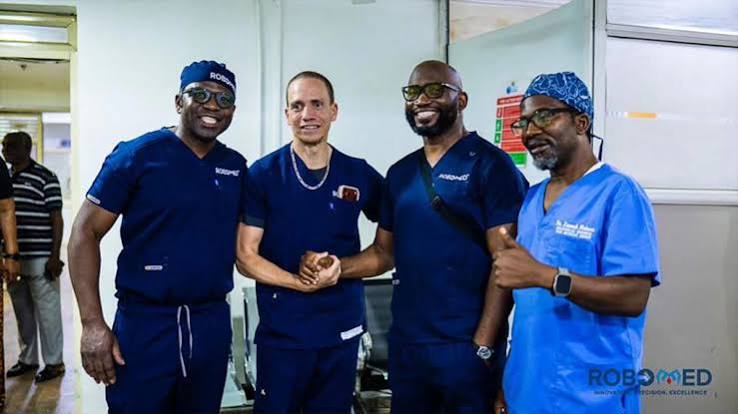
While the surgical team operated the robotic system remotely from Ogun State, the patient remained at Nisa Premier Hospital in Abuja. Reports put the distance between the two locations at about 500 kilometres.
HOW THE REMOTE SURGERY WORKED
Unlike conventional surgery, where the surgeon stands beside the patient, telerobotic surgery allows a trained surgeon to control specialised robotic instruments from a separate location.
In this case, the surgeon’s movements at the robotic console were transmitted to the surgical robot at the Abuja hospital through an internet-connected system, allowing the operation to be performed remotely.
The technology does not mean that a robot independently performed the surgery. The robotic equipment remained under the direct control of the surgeon, translating the surgeon’s movements into highly precise surgical actions at the patient’s location.
The operation reportedly lasted about three hours, with brief pauses during the procedure to check the equipment and ensure that the communication and surgical systems were functioning properly.
Following the operation, the patient was reported to be in good condition and was expected to be discharged within about 24 hours.
A BREAKTHROUGH FOR SPECIALIST HEALTHCARE
The surgeon who led the procedure, Prof. Obi Davies-Ekwenna, described the achievement as evidence that advanced surgical expertise can be delivered across significant geographical distances.
He noted that the successful operation demonstrated the possibility of providing specialist surgical care to patients without necessarily requiring them to travel long distances to where the specialist is physically located.
For Nigeria, the development could have important implications for access to specialised healthcare, particularly for patients living in areas where certain highly trained specialists or advanced surgical facilities are not readily available.
The technology could potentially allow specialists in other parts of Nigeria, and eventually qualified Nigerian specialists abroad, to participate remotely in complex procedures where the necessary infrastructure, connectivity, medical teams and regulatory safeguards are in place.
RHV CALLS FOR INVESTMENT IN MEDICAL MANPOWER
Chief Executive Officer of Redeemer’s Health Village, Dr. Adedamola Dada, described the development as a major breakthrough for Nigeria and West Africa.
Dada stressed that while sophisticated equipment is essential, the availability of trained medical personnel remains one of the most important factors in sustaining robotic surgery.
He called on the Federal Government and other stakeholders to support the training of Nigerian surgeons, nurses, biomedical engineers and other healthcare professionals who will be required to operate and maintain advanced robotic-surgery systems.
According to him, government-backed scholarships and training programmes could help build a strong pool of local professionals capable of sustaining the technology over the coming years.
PLAN TO TRAIN 150 SURGEONS
As part of efforts to build local capacity, RHV and its partners are developing a robotic academy aimed at training medical professionals in robotic surgery.
Prof. Davies-Ekwenna said the programme has a target of training at least 150 surgeons within the next two years, alongside other professionals required to support robotic surgical procedures.
The emphasis on manpower development is significant because the expansion of robotic surgery requires more than the acquisition of robots. It also requires surgeons who can use the systems effectively, nurses trained in robotic procedures, biomedical engineers capable of maintaining the equipment and reliable technological infrastructure.
ANOTHER ROBOTIC PROCEDURE PERFORMED
The telerobotic operation was not the only robot-assisted procedure performed at RHV during the reported medical session.
The facility also carried out a robotic-assisted pyeloplasty on a 28-year-old patient who had an obstruction affecting the drainage of her kidney.
According to RHV, the procedure involved reconstructing the affected area and removing the obstruction to restore the normal flow of urine.
The development illustrates the broader application of robotic technology beyond a single surgical procedure and reflects the growing use of robotic systems in complex medical interventions in Nigeria.
POTENTIAL TO REDUCE MEDICAL TOURISM
Healthcare stakeholders involved in the initiative also linked the development to Nigeria’s longstanding challenge of medical tourism.
The ability to perform sophisticated procedures domestically could potentially reduce the number of patients who need to travel abroad for certain specialised treatments, provided that the necessary expertise, equipment, infrastructure and regulatory standards are available.
Dr Dada said the initiative was intended to demonstrate that Nigerians can access modern healthcare within the country rather than automatically seeking treatment overseas.
CONNECTIVITY REMAINS CRITICAL
For telerobotic surgery to function safely, reliable communication infrastructure is essential because the surgeon’s commands must be transmitted between the remote console and the robotic system in real time.
Reports on the procedure said the participating facilities used internet connectivity to link the two locations, with measures put in place to address possible connectivity challenges.
Experts involved in the programme have noted that issues including network reliability, equipment quality, weather-related disruptions and availability of trained personnel must be carefully managed as remote surgery expands.
This means that the future development of telerobotic surgery in Nigeria will depend not only on medical innovation but also on improvements in digital infrastructure, healthcare regulation, technical support and professional training.
A NEW FRONTIER FOR NIGERIAN HEALTHCARE
The landmark operation has placed Nigeria at the centre of an important development in African healthcare technology.
By successfully connecting a surgical team in Ogun State to a patient in Abuja, the procedure demonstrated how geographical distance can potentially be overcome through a combination of medical expertise and advanced technology.
It also highlighted the growing collaboration between Nigerian hospitals, international technology partners, surgeons, engineers and other healthcare professionals.
The success of the operation could encourage further investment in robotic surgery, telemedicine, medical technology and specialist training, while opening discussions about how such technologies can eventually reach more patients across Nigeria.
For a country with a large and geographically dispersed population, the potential application is significant: specialist expertise could, under appropriate clinical and regulatory conditions, be made accessible to patients without requiring every specialist or patient to be physically present in the same location.
The achievement therefore represents more than a single surgical procedure. It demonstrates the possibilities created when medicine, robotics, telecommunications and human expertise converge to address healthcare challenges.
As Nigeria continues to invest in advanced medical technology and local capacity development, the successful telerobotic procedure provides an important demonstration of what technology-driven healthcare could look like in the years ahead.
Enugu Media Village (EMV) reports that the development marks a significant moment in Nigeria’s healthcare technology journey and underscores the potential of innovation and collaboration to expand access to specialised medical care.
Informing Enugu, Connecting the World.
Promoting Accountability, Public Participation, Transparency and Good Governance.