

Oil Marketers Turn Increasingly to Local Refining as Imported Petrol and Diesel Become More Expensive.
Enugu Media Village (EMV), the Most Updated Online News Platform | September 22, 2026.
The Dangote Petroleum Refinery is gaining a stronger position in Nigeria’s downstream petroleum market as the estimated cost of importing petrol and diesel rises above the refinery’s current selling prices, prompting oil marketers to increase their purchases from the domestic refinery.
The development comes amid a sharp rise in international crude oil and refined-product prices, driven by disruptions in global energy supplies. The changing price relationship is making locally refined products increasingly competitive with imported alternatives.
Industry reports indicate that marketers are increasingly lifting petroleum products from the Dangote refinery as they assess the cost of importing competing supplies. Fresh cargoes are still moving through Nigeria’s coastal supply chain, but the economics of imports have become less attractive as international prices and associated costs rise.
LOCAL REFINING BECOMES MORE COMPETITIVE
The latest development highlights the growing influence of domestic refining on Nigeria’s petroleum market.
With imported products exposed to international crude prices, freight, insurance, port charges, exchange-rate movements and other logistics costs, an increase in global energy prices can quickly raise the effective landing cost of imported fuel.
The Dangote refinery, by contrast, is positioned to supply products directly into the Nigerian market, reducing some of the costs associated with bringing refined petroleum products from overseas.
This changing price dynamic is encouraging more marketers to consider domestic supplies when determining the most economical source of petrol and diesel.
DANGOTE PRICE ADJUSTMENTS
The refinery has also adjusted its own petrol prices in response to rising crude oil costs.
On September 12, Dangote Petroleum Refinery raised its petrol gantry price from ₦1,265 to ₦1,350 per litre, representing its fourth upward price review since August 21.
The successive adjustments followed a period of rising international crude prices and increasing pressure across the global petroleum market.
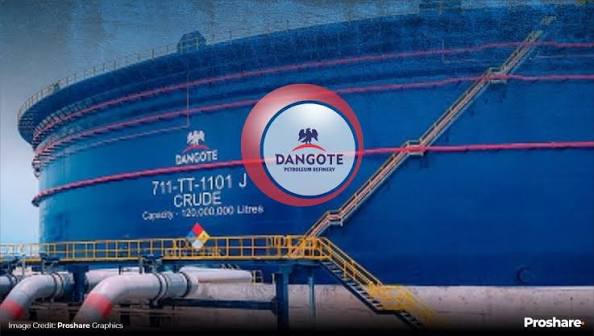
Despite the higher domestic price, the refinery’s products are now becoming relatively more competitive as the cost of importing refined fuel rises.
GLOBAL OIL SHOCK DRIVES PRESSURE
The shift is occurring against the backdrop of significant disruption in international energy markets.
Global crude oil prices have risen above $100 per barrel amid geopolitical tensions and disruptions to energy supplies, while international diesel prices have also surged to record levels.
Reuters reported that global diesel markets have been particularly affected by disruptions involving major producing and exporting countries, leaving refineries around the world operating at high capacity with limited spare capacity to quickly increase supply.
For Nigeria, which historically relied heavily on imported refined petroleum products, such developments expose domestic fuel prices to international market movements.
FUEL IMPORTS HAVE FALLEN SIGNIFICANTLY
The growing role of the Dangote refinery has already contributed to a substantial reduction in Nigeria’s dependence on imported petrol.
According to Reuters, Nigeria’s petrol imports have fallen from about 400,000 barrels per day in 2024 to roughly 83,000 barrels per day in 2026, as domestic production from the Dangote refinery increasingly supplies the market.
However, imports have not disappeared completely.
Nigeria spent ₦952.15 billion on imported petrol in the second quarter of 2026, according to data reported by The PUNCH from the National Bureau of Statistics’ foreign trade figures. Although the figure represented a sharp quarterly increase, it was substantially below the value recorded in the corresponding period of 2025.
The figures demonstrate that Nigeria’s downstream market is currently being supplied through a combination of domestic refining and imported products.
MARKETERS HAVE MORE INCENTIVE TO BUY LOCALLY
The latest shift in pricing economics could encourage marketers to increase their reliance on locally refined petroleum products.
When the landed cost of imported petrol or diesel rises above the domestic refinery’s selling price, buying locally can become commercially more attractive, particularly when transportation and other import-related expenses are taken into account.
For marketers, the calculation is ultimately influenced by the price at which products can be obtained, the cost of transporting them to their distribution points and prevailing retail-market conditions.
The latest development therefore strengthens the commercial position of domestic refining at a time when international fuel markets are experiencing considerable volatility.
DIESEL MARKET ALSO UNDER PRESSURE
The changing economics are not limited to petrol.
International diesel prices have experienced substantial increases, with disruptions to global supplies from major producers putting additional pressure on the market.
Reuters reported that European diesel futures recently reached record levels, while Middle Eastern diesel exports fell sharply compared with the previous year.
The situation creates an opportunity for large domestic refiners capable of supplying diesel to both the Nigerian market and international customers.
Dangote has already increased its role in regional and international diesel and gasoil markets. Reuters reported that its diesel and gasoil exports increased by 23 per cent to about 48,000 barrels per day in 2026 to date.
DANGOTE’S GROWING ROLE IN THE GLOBAL MARKET
The refinery’s growing influence extends beyond Nigeria.
Reuters reported that the facility has become an increasingly important supplier of refined petroleum products to Europe and other markets amid disruptions to global fuel supplies.
The refinery reportedly generated $1.82 billion in net profit in the first half of 2026, compared with a loss of $476 million for the whole of 2025, according to its prospectus.
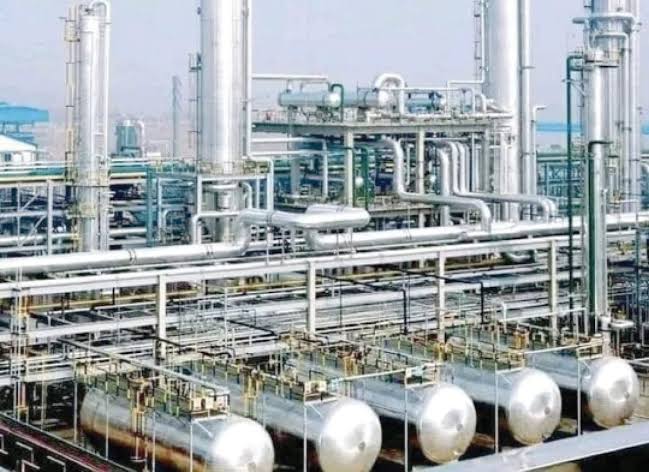
The company is also pursuing plans to expand its refining capacity significantly, with a target of reaching approximately 1.4 million barrels per day by 2029, according to Reuters.
WHAT THE DEVELOPMENT MEANS FOR NIGERIA
The increasing competitiveness of locally refined products could have broader implications for Nigeria’s economy.
Greater reliance on domestic refining can reduce the volume of foreign exchange required to purchase refined petroleum products overseas and potentially strengthen domestic supply security.
It can also support the development of associated industries, including petroleum logistics, storage, transportation, engineering and other services connected to the downstream oil sector.
However, the current market also demonstrates that domestic refining does not completely insulate Nigeria from international oil-price movements.
Recent fuel-price increases show that domestic pump prices remain influenced by the cost of crude oil and wider international market conditions. Reuters reported that petrol prices had risen to around ₦1,400 per litre in Lagos and Abuja, with some northern locations recording prices as high as ₦1,500, while diesel prices had exceeded ₦2,000 per litre.
A SHIFTING DOWNSTREAM MARKET
The latest development represents another stage in the transformation of Nigeria’s downstream petroleum sector.
For decades, Nigeria depended heavily on imported refined petroleum products despite being a major crude oil producer. The emergence of large-scale domestic refining capacity is changing that structure, although the transition remains influenced by global crude prices, exchange rates, logistics and market competition.
As international import costs rise, the Dangote refinery’s ability to supply petroleum products competitively gives domestic refining a stronger position in the Nigerian market.
The central question for consumers, however, remains whether increased domestic refining capacity will eventually translate into more stable and affordable fuel prices.
For now, the latest market data indicate that the economics of local refining are becoming increasingly favourable relative to imports as international petroleum costs climb.
Enugu Media Village (EMV) reports that the development underscores the growing strategic importance of domestic refining to Nigeria’s energy security, petroleum supply chain and broader economic outlook.
Informing Enugu, Connecting the World.
Promoting Accountability, Public Participation, Transparency and Good Governance.