
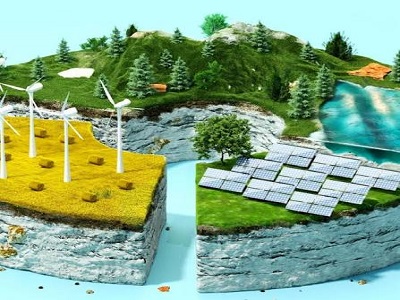
Global renewable capacity expands at record pace, but experts say deployment must accelerate significantly to meet 2030 climate goals.
Enugu Media Village (EMV), the Most Updated Online News Platform | September 22, 2026.
Renewable energy deployment reached unprecedented levels in 2025, with solar and wind power driving a record expansion in clean-energy capacity worldwide, even as countries face growing pressure to accelerate climate action ahead of the 2030 deadline.
According to the International Renewable Energy Agency (IRENA), the world added a record 692 gigawatts (GW) of renewable power capacity in 2025, representing a 15.5 per cent increase over the previous year.
Renewables accounted for approximately 49 per cent of global installed power capacity by the end of 2025 and represented 85.6 per cent of all new power capacity added during the year.
Solar energy remained the major driver of the expansion, contributing about 510 GW of new capacity, while wind power added approximately 159 GW. IRENA said the figures represented the largest annual increase in renewable capacity recorded to date.
The International Energy Agency (IEA) similarly reported that global renewable capacity additions reached around 800 GW in 2025, with solar photovoltaic technology accounting for more than three-quarters of the additions. The IEA described 2025 as the 23rd consecutive year in which renewable energy set a new expansion record.
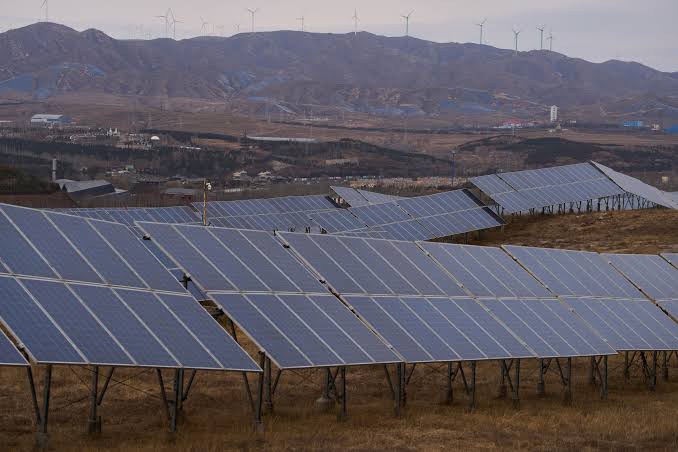
Despite the remarkable growth, the latest international assessments warn that the current pace remains insufficient to achieve the global target of substantially increasing renewable-energy capacity by 2030.
IRENA said the world needs to build more renewable power capacity during the 2026–2030 period than it has built in all previous years combined if it is to remain on track for the internationally agreed 2030 objective.
A separate report released by renewable-energy organisations also warned that global renewable deployment must more than double by 2030 to meet established climate targets, despite the record growth achieved in 2025.
The expansion is also uneven across regions. IRENA reported that China, the United States and the European Union accounted for 79.5 per cent of new renewable capacity installed globally in 2025, while Africa accounted for only 1.6 per cent, despite recording its highest annual increase in renewable capacity.
Africa’s renewable capacity grew by 15.9 per cent during the year, reaching approximately 82 GW, with Ethiopia, South Africa and Egypt among the countries contributing significantly to the expansion.
The figures highlight both the progress and the remaining challenges facing the global energy transition. Greater investment in electricity grids, energy storage, financing, technology and infrastructure will be needed to accommodate the rapid growth of variable renewable sources such as solar and wind.
The IEA also reported that clean-energy technologies made a major contribution to meeting additional global energy demand in 2025. Solar power alone accounted for more than a quarter of the increase in global energy demand, while low-emissions sources collectively contributed nearly 60 per cent of demand growth.
With the 2030 climate targets approaching, international energy agencies are therefore calling for faster deployment, stronger investment and broader access to renewable technologies, particularly in developing regions where clean-energy capacity remains comparatively low.
The latest figures demonstrate that renewable energy is expanding at record speed. The central challenge now is whether governments, businesses and financial institutions can accelerate that expansion sufficiently to meet the world’s climate and energy objectives.
Enugu Media Village (EMV), Informing Enugu, Connecting the World — Promoting Accountability, Public Participation, Transparency and Good Governance.