
Enugu Media Village (EMV), the Most Updated Online News Platform | October 12, 2026.
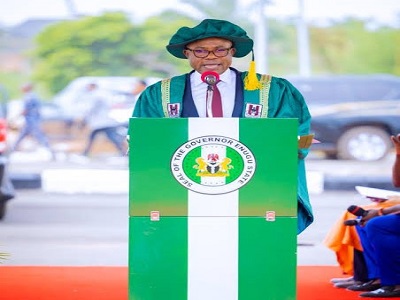
ENUGU State Governor, Dr. Peter Ndubuisi Mbah, has called for the declaration of a national emergency in Nigeria’s education sector, urging governments at all levels to increase investment in education, strengthen teacher development and provide learning environments that prepare young people for the demands of a changing world.
The governor made the call during the 2026 Enugu Education Summit and the official unveiling of the Enugu State Education Policy at the International Conference Centre, Enugu, on Wednesday, October 7, 2026. The summit brought together representatives of the United Nations Children’s Fund (UNICEF), the United Nations Educational, Scientific and Cultural Organization (UNESCO), the British Council and other education stakeholders.
The summit, themed “Transforming Education for the Future: Leadership, Innovation, Partnership, Financing and Sustainable Reform,” focused on the need for stronger leadership, sustainable financing, institutional partnerships and reforms capable of improving learning outcomes.
Governor Mbah maintained that education should be treated as a national priority not merely through public statements but through concrete budgetary commitments, improved infrastructure, professional teacher development and measurable standards of performance.
He argued that Nigeria’s long-term prosperity depends on equipping every child with the knowledge, skills and capabilities required to participate meaningfully in society, contribute to economic growth and respond to emerging opportunities.
Mbah Unveils Enugu State Education Policy
A major highlight of the summit was the official unveiling of the Enugu State Education Policy, which the governor said was already being implemented and would guide the state’s education sector over the next six to 10 years.
The policy is intended to provide a framework for educational planning, institutional development and the delivery of learning opportunities that respond to contemporary social, economic and technological realities.
According to the state government, the policy reflects an effort to move beyond isolated interventions towards a coordinated approach to education reform, with attention to school infrastructure, teacher capacity, foundational learning, digital literacy and experiential education.
The governor stressed that education reform requires sustained investment and careful planning, noting that infrastructure development alone cannot deliver lasting progress without adequately prepared teachers and students equipped with relevant skills.
The implementation of the policy will therefore be important in determining how the state translates its stated ambitions into measurable improvements in teaching quality, student performance, access to education and institutional accountability.
State Reports Major Investments in Education
During his address, Governor Mbah cited the administration’s decision to allocate 33 per cent of the state’s annual budget to education for three consecutive years as evidence of its stated commitment to transforming the sector.
He also highlighted the construction of 268 Smart Green Schools and more than 7,000 classrooms equipped with modern learning facilities as part of the government’s education programme.
The Smart Green Schools initiative is designed to incorporate technology-enabled learning and environmentally conscious school infrastructure, while the state’s broader reform programme seeks to improve the learning experience and prepare students for future opportunities.
The governor argued that Nigeria must develop an education system that enables young people not only to use existing technologies but also to acquire the capacity to innovate, conduct research, solve problems and create products and services.
However, the long-term impact of these investments will depend on effective implementation, the availability of qualified teachers, adequate maintenance of facilities and evidence of improvements in learning outcomes across schools and communities.
UNICEF, UNESCO and British Council Emphasise Partnerships
Representatives of UNICEF, UNESCO and the British Council acknowledged the importance of sustained investment, institutional collaboration and policies focused on improving educational outcomes.
UNICEF’s Country Representative to Nigeria, Wafaa Saeed, represented by the Chief of Field Office in Enugu, Juliet Chilewe, said the state had demonstrated commitment to education transformation through investments in Smart Green Schools, teacher development, foundational learning, digital literacy and experiential learning.
UNICEF also highlighted its support for the development of the Enugu State Education Sector Plan 2026–2035, which provides a longer-term framework for planning and implementing education-sector priorities.
UNESCO, represented by its Officer-in-Charge of the Education Sector, Adeyemi Oladeji, commended the state’s investment in school infrastructure and its efforts to integrate digital learning with environmentally responsible education.
The organisation also referenced the Centre for Experiential Learning and Innovation (CELI) and the state government’s plan to recruit more than 6,000 teachers.
The British Council, represented by its Director for English and School Education in Nigeria, Fwanshihsak Daniel, expressed support for efforts to strengthen foundational learning, creativity and the skills students need to contribute to society and the economy.
The participation of these organisations highlights the importance of cooperation among government institutions, development partners, educators, communities and the private sector in addressing persistent challenges in education.
Teacher Development and Learning Outcomes Remain Central
While modern classrooms and digital facilities are important components of education reform, the quality of teaching remains central to students’ academic progress.
Teacher recruitment, professional development, effective supervision and access to appropriate instructional materials will be essential to ensuring that infrastructure investments translate into improved classroom experiences.
Equally important are foundational literacy and numeracy, inclusive access for children with disabilities, support for disadvantaged communities and measures to reduce barriers that prevent children from enrolling in or completing school.
The proposed recruitment of additional teachers will therefore require transparent recruitment procedures, equitable deployment across communities and sustained professional support to meet the needs of schools throughout Enugu State.
Parents, teachers, school administrators and community representatives also have an important role in monitoring school performance and ensuring that reforms respond to the realities of learners.
Accountability and the Road Ahead
The declaration of a national emergency in education, as advocated by Governor Mbah, raises broader questions about how Nigeria can finance and sustain reforms that improve access, equity and learning outcomes.
For Enugu State, the implementation of the newly unveiled education policy will require clear targets, transparent budget execution, regular performance assessments and publicly accessible information on progress.
Beyond the number of schools constructed or classrooms equipped, key indicators should include student attendance, literacy and numeracy levels, teacher availability, completion rates, school safety and the affordability of education for families.
Independent evaluation and public reporting can help determine whether government programmes are achieving their intended objectives and identify areas requiring further intervention.
As the state proceeds with its education agenda, sustained collaboration among government agencies, development partners, teachers, parents and communities will be important to ensuring that educational reforms produce lasting benefits for children and young people.
Enugu Media Village (EMV), the Most Updated Online News Platform, remains committed to promoting accountability, public participation, transparency and good governance while spotlighting initiatives that advance women’s empowerment, grassroots development and inclusive growth across Enugu State.
Promoting credible journalism, public accountability and good governance.