
Enugu Media Village (EMV), the Most Updated Online News Platform— OCTOBER 16, 2026.
AGRICULTURE remains one of the sectors young Nigerians can explore to build sustainable businesses, generate income and create employment. Across Enugu, Anambra, Abia, Ebonyi and Imo states, opportunities exist not only in cultivating crops and rearing animals but also in processing, packaging, transporting and marketing agricultural products.
For many young people, the perception that agriculture requires vast farmland, expensive machinery and substantial capital has become a barrier to participation. However, agribusiness offers different entry points, including small-scale production, product processing, agricultural input supply and distribution.
The key is to approach agriculture as a business rather than merely an occupation.
With proper planning, market research, practical skills and effective financial management, young entrepreneurs can identify agricultural needs within their communities and develop businesses around them.
In this edition of the EMV Youths Economic Forum, we examine six agribusiness opportunities South-East youths can explore, the markets they can serve, the risks they must understand and the practical steps required to get started.
1. Poultry Farming: Supplying Eggs and Chicken to a Growing Market
Poultry farming is an option for young entrepreneurs interested in supplying eggs and chicken to households, restaurants, hotels, bakeries, caterers and food vendors.
There are two major production options: broiler farming, which focuses on meat production, and layer farming, which focuses on egg production. Young people can also participate by distributing eggs, supplying poultry feed or selling approved poultry equipment.
Business opportunity: A young entrepreneur could start with a manageable poultry unit after assessing the cost of housing, chicks, feed, medication, labour and transportation. Alternatively, an entrepreneur with limited technical experience could begin by sourcing eggs from established farms and supplying retailers and food businesses.
Major risks:
- Rising prices of poultry feed and day-old chicks.
- Diseases and unexpected bird mortality.
- Poor hygiene and inadequate veterinary care.
- Fluctuating market prices and inconsistent demand.
How to get started: Learn poultry management from an experienced farmer or agricultural extension officer. Research local demand, obtain reliable suppliers and calculate the cost of production before purchasing birds.
Young entrepreneurs should also identify potential buyers early and avoid expanding production until they can manage the business effectively.
2. Snail Farming: An Alternative for Small-Scale Entrepreneurs
Snail farming is another agribusiness option worth investigating, particularly for young people who have access to suitable space but cannot afford large-scale livestock operations.
Snails are consumed in parts of the South-East and may be sold to households, restaurants, food vendors and specialist traders. Entrepreneurs can also investigate supplying breeding stock to other farmers where demand exists.
Business opportunity: A young person can establish a small snail-rearing unit, learn the appropriate feeding and housing requirements, and gradually develop a customer base.
However, snail farming should not be treated as a guaranteed source of quick income. Production depends on the species, environmental conditions, feeding, breeding and management practices.
Major risks:
- Slow growth and delayed returns.
- Predators, pests and poor enclosure design.
- Unsuitable moisture and temperature conditions.
- Limited access to reliable buyers.
How to get started: Seek practical training before purchasing breeding stock. Confirm that customers are available in your area and understand the production cycle, operating costs and likely time before sales.
Start small, maintain proper records and expand only when you have evidence that your production and marketing arrangements are working.
3. Fish Farming: Building a Business Around Aquaculture
Fish farming, especially catfish production, offers opportunities for young entrepreneurs who can provide suitable water facilities, manage feeding and maintain good production conditions.
Potential customers include fish retailers, restaurants, hotels, pepper-soup outlets, fish smokers and households.
Beyond raising fish, young people can explore the supply of fingerlings, fish feed distribution, smoking, processing and the delivery of fresh fish to customers.
Business opportunity: An entrepreneur could establish a small fish farm or partner with existing producers to supply restaurants and retailers. Another option is to concentrate on fish processing and distribution rather than production.
Major risks:
- High feed costs.
- Poor water quality and inadequate oxygen.
- Fish mortality resulting from disease or poor management.
- Inadequate working capital.
- Difficulty finding buyers at the expected selling price.
How to get started: Investigate the cost of suitable ponds or tanks, reliable fingerlings, water supply and feed. Speak with experienced fish farmers and prospective buyers before making significant investments.
Calculate the likely cost of raising fish to market size and compare it with realistic local selling prices. A fish farm becomes sustainable through careful management, not simply by stocking a pond and waiting for harvest.
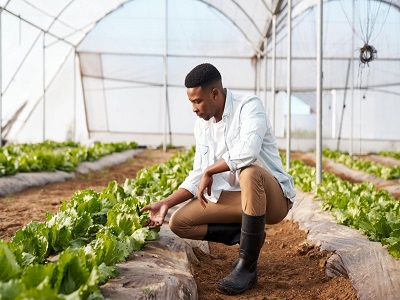
4. Vegetable Production: Meeting Everyday Food Needs
Vegetable production can be attractive to young people with access to suitable land, water and nearby markets.
Crops such as ugu, okra, tomatoes, peppers and other locally consumed vegetables can supply households, restaurants, caterers, retailers and market traders.
Business opportunity: Young entrepreneurs can establish small vegetable gardens, grow crops suited to their locations or produce seedlings for other farmers. They may also develop direct supply arrangements with restaurants and retailers that need regular deliveries.
Vegetable production can be started on a relatively modest scale, but the right crop depends on soil conditions, water availability, growing season and customer demand.
Major risks:
- Unpredictable market prices.
- Pests and crop diseases.
- Excessive rainfall or water shortages.
- Spoilage when harvested produce is not sold quickly.
How to get started: Research which vegetables sell consistently in nearby markets. Seek agricultural guidance on crop selection, soil management, pest control and irrigation.
Because many vegetables are highly perishable, develop a sales plan before harvesting. Proper sorting, handling and timely transportation can help reduce losses and improve customer satisfaction.
5. Food Processing: Adding Value to Local Agricultural Produce
Agricultural products can become more valuable when they are processed, packaged and presented in forms customers find convenient.
Food processing provides opportunities for young people who may not want to operate farms but are interested in manufacturing, branding, marketing and product development.
Potential products include garri, cassava flour, packaged spices, palm oil, maize flour and properly processed dried vegetables.
Business opportunity: An entrepreneur could source cassava from local farmers, work with an existing processor to produce garri, and build a business supplying retailers and households. Another could package and distribute palm oil or develop a small-scale spice business.
This approach can create links between farmers and consumers while opening opportunities in packaging, branding, transportation and sales.
Major risks:
- Equipment, energy and packaging costs.
- Contamination and inconsistent product quality.
- Competition from established brands.
- Difficulty attracting customers.
- Food safety and regulatory requirements.
How to get started: Identify a product with demonstrated demand and test it with small batches. Calculate the full cost of sourcing, processing, packaging, transportation and marketing before setting your selling price.
Maintain appropriate hygiene and food safety standards, and verify applicable registration, labelling and product requirements with the relevant authorities, including NAFDAC where required.
The objective is to create a product customers trust and are willing to purchase repeatedly.
6. Agricultural Distribution: Connecting Farmers to Customers
Agricultural distribution is an opportunity for young people who want to participate in the food industry without necessarily owning farmland or operating a production facility.
Farmers need dependable buyers, while restaurants, retailers, hotels, food vendors and households require reliable supplies of agricultural products.
Entrepreneurs can create value by connecting these two groups.
Business opportunity: Young people can distribute eggs, vegetables, fish and other food products; supply agricultural inputs; aggregate produce from farmers; or organise deliveries to retailers and restaurants.
For instance, a young entrepreneur could identify restaurants that require regular supplies of vegetables, establish relationships with reliable farmers and coordinate deliveries according to confirmed orders.
Revenue may come from a trading margin, distribution fee or another clearly agreed arrangement.
Major risks:
- Spoilage during transportation and storage.
- Rising fuel and logistics costs.
- Unstable purchase and selling prices.
- Customers delaying payment.
- Purchasing goods without confirmed demand.
How to get started: Identify prospective buyers and understand their quantity, quality, pricing and delivery requirements. Develop relationships with dependable suppliers and begin with manageable orders.
Where possible, confirm customer orders before purchasing perishable produce. Keep detailed records of buying prices, transportation, handling costs, sales and payments received.
In this business, reliability can become a competitive advantage. Customers are more likely to return to suppliers who deliver the right products, in the right quantities, at the agreed time.
Which Agribusiness Is Right for You?
The best opportunity depends on your capital, skills, available resources, local demand and willingness to manage operational risks.
| Agribusiness | What you need | Main risk |
|---|---|---|
| Poultry farming | Housing, feed and animal-health knowledge | Disease and rising feed costs |
| Snail farming | Suitable enclosure and patience | Slow returns and mortality |
| Fish farming | Water facilities, feed and technical skills | Feed costs and water quality |
| Vegetable production | Suitable land, water and market access | Spoilage and price fluctuations |
| Food processing | Processing arrangements, packaging and hygiene | Operating costs and compliance |
| Agricultural distribution | Reliable suppliers, buyers and logistics | Spoilage and cash flow |
These are general comparisons rather than guarantees of profitability. Actual costs, sales and returns will depend on location, business scale, management and market conditions.
Five Practical Steps Before Investing in Agribusiness
1. Study the market. Find out what customers in your area buy, how often they buy it, what quality they expect and what they are willing to pay.
2. Prepare a realistic budget. Include production or purchasing costs, transportation, labour, utilities, packaging, maintenance and possible losses. Use current local prices rather than assumptions.
3. Acquire practical skills. Learn from experienced farmers, processors, distributors and agricultural extension officers before committing substantial capital.
4. Start small and test your business model. Use a manageable pilot to assess customer demand, production costs and your ability to deliver consistently.
5. Keep accurate financial records. Track income, expenses, stock and outstanding payments. Remember that sales revenue is not the same as profit.
Young entrepreneurs should also separate business money from personal spending and retain sufficient working capital to sustain the next production or trading cycle.
How the South-East Can Support Youth Agribusiness
The development of youth-led agribusiness requires more than encouraging young people to enter farming. It also requires access to practical training, market information, appropriate financing, reliable infrastructure and productive business relationships.
Government agencies, schools, agricultural institutions, financial organisations, cooperatives and youth groups can help connect young entrepreneurs with established farmers, processors, suppliers and prospective buyers.
In Enugu, Anambra, Abia, Ebonyi and Imo states, stronger agricultural supply chains could create opportunities across rural and urban communities.
Technology can also support this process. Young entrepreneurs can use digital tools to advertise products, communicate with buyers, monitor orders and organise deliveries. However, digital platforms work best when supported by dependable suppliers, sound financial management and genuine customer demand.
Young people should verify the legitimacy, eligibility conditions and repayment terms of any grant or loan programme before relying on it. Borrowing should be based on a realistic business plan rather than expectations of immediate profit.
Conclusion: Think Like an Entrepreneur, Not Just a Farmer
Agriculture is a business that extends from the farm to the final consumer. Whether a young person chooses poultry farming, snail production, fish farming, vegetable cultivation, food processing or agricultural distribution, success depends on understanding the market and managing costs effectively.
There is no single agribusiness that guarantees success for everyone. A business that works for one entrepreneur may fail for another because of differences in location, capital, management and access to customers.
The smarter approach is to identify a genuine market need, acquire the necessary skills, start at a manageable scale and improve the business based on actual results.
For South-East youths, agriculture can become a pathway to self-employment, enterprise development and job creation when approached with innovation, discipline and sound business planning.
You do not have to own hundreds of hectares before you can participate in agriculture. You can start by producing, processing, packaging, supplying or distributing what people need.
The opportunity is to move beyond seeing agriculture only as farming and begin recognising it as a complete business value chain.
EMV YOUTHS ECONOMIC FORUM
Empowering young people with practical knowledge, entrepreneurial skills and economic opportunities for a more productive future.
Enugu Media Village (EMV), the Most Updated Online News Platform — Informing Enugu, Connecting the World.
Promoting Accountability, Public Participation, Transparency and Good Governance.