
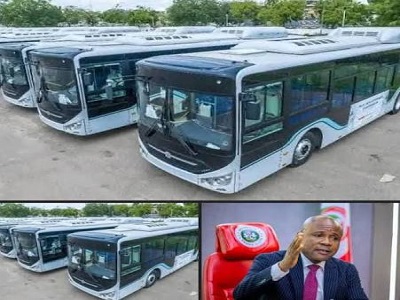
From Chaotic Roadside Loading and Unpredictable Fares to Structured Terminals, Enugu’s Transport Sector is Undergoing a Major Transformation under the Administration of Gov. Peter Mbah.
Enugu Media Village | 22nd August, 2026.
Enugu State is witnessing a significant transformation in its transportation landscape as the administration of His Excellency, Dr. Peter Mbah, advances what can be described as a Modern Transport System Era.
The vision goes beyond the provision of buses and terminals. It represents a broader effort to create a transportation system that is safe, organized, efficient, accessible and responsive to the needs of a growing population.
For years, commuters in Enugu have had to contend with overcrowded parks, roadside loading, traffic congestion, irregular fares and the uncertainty that often accompanies public transportation. The emerging system seeks to replace these challenges with modern infrastructure, organized operations and improved commuter convenience.
At its core, the transformation is about more than moving people from one location to another. It is about restoring dignity to public transportation, supporting economic activity, improving productivity and positioning Enugu as a modern and livable city.
1. Modern Transport Terminals: Building the Infrastructure for a New Era
A modern transport system requires modern infrastructure. This is why the development of transport terminals is central to the transformation of the sector.
The administration has embarked on the development of modern transport facilities designed to bring greater order to passenger movement, reduce congestion and provide commuters with safer and more convenient environments.
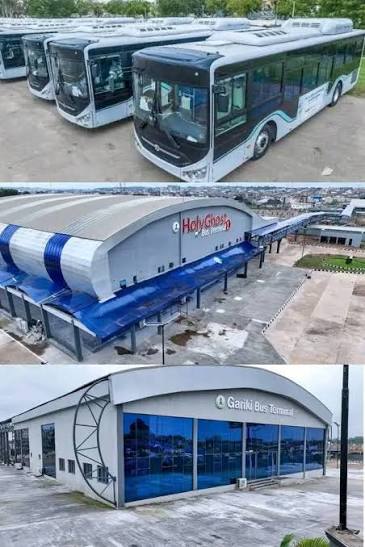
The terminals are envisioned as organized transportation hubs where passengers can access designated loading points, waiting areas, security infrastructure and other essential services.
Among the locations associated with the state’s transport development are Holy Ghost, Gariki, Nsukka, Abakpa and the 9th Mile axis.
These facilities are expected to contribute significantly to the decentralization of transportation activities and reduce the pressure created by unregulated roadside loading.
The transformation also reflects a broader philosophy: that transport infrastructure should serve not only as a point of departure and arrival, but as part of the wider urban-development architecture of Enugu.
2. CNG-Powered Mass Transit: A Response to the New Economic Reality
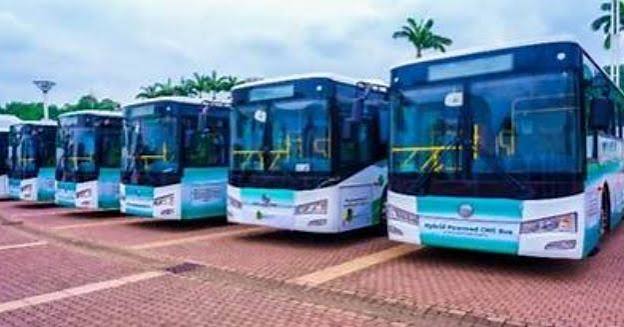
One of the notable features of the administration’s transportation strategy is the adoption of Compressed Natural Gas (CNG) technology as part of efforts to develop a more efficient mass-transit system.
The move comes against the backdrop of rising transportation costs and the wider economic impact of changes in the country’s petroleum sector.
CNG-powered buses offer the potential for lower operating costs while also supporting a cleaner transportation environment.
For commuters, the significance is straightforward: a more efficient mass-transit system can help reduce the financial burden of daily transportation while providing a more predictable commuting experience.
The introduction of modern buses also presents an opportunity to improve passenger comfort through features such as air conditioning, improved seating arrangements, security systems and structured routes.
3. The Economic Impact: Moving People, Driving Commerce
Transportation is one of the foundations of any functioning economy.
When people can move efficiently, businesses can operate more effectively. When goods can reach markets faster, traders can reduce unnecessary costs. When workers arrive at their workplaces on time, productivity improves.
This is why the modernization of Enugu’s transport sector has implications far beyond commuters.
A more organized transport network can support businesses, stimulate commercial activities and create employment opportunities across various parts of the transportation value chain.
From drivers and terminal operators to maintenance workers, ICT personnel, vendors and other service providers, the expansion of modern transportation infrastructure has the potential to create new economic opportunities.
4. What It Means for Traders
For traders, particularly those operating around major commercial centers such as Ogbete Main Market, efficient transportation is essential.
The movement of goods from transport terminals to markets can significantly influence the final cost of commodities.
A better-organized system with designated loading areas, improved traffic management and more predictable transportation charges can help reduce some of the inefficiencies associated with moving goods around the city.
For traders, every reduction in transportation time and cost can translate into better business margins and more competitive prices for consumers.
This makes transport reform not simply a government infrastructure project, but an economic intervention with direct consequences for commerce.
5. Students and Young People: Safer and More Predictable Mobility
Students of institutions such as UNN, ESUT, IMT and other schools across the state constitute a significant part of Enugu’s commuting population.
For young people who travel daily between campuses, residences and commercial centres, transportation costs and reliability can have a direct impact on their academic lives.
A structured transport system with designated routes, scheduled buses and secure terminals can make commuting more predictable.
Improved lighting, organized boarding points and security infrastructure can also provide a safer environment, particularly for students traveling during early morning or evening hours.
The larger objective is to make mobility less stressful so that students can devote more time and energy to their education.
6. Civil Servants: Reducing the Stress of Daily Commuting
For civil servants and other workers who commute from areas such as Emene, Gariki, Trans-Ekulu and surrounding communities, reliable public transportation is an important part of daily life.
A transport system built around designated routes and predictable schedules can help workers plan their journeys more effectively.
Reduced waiting times can translate into improved punctuality, while less stressful commuting can contribute to greater productivity within government ministries, departments and agencies.
In this regard, transport reform becomes indirectly connected to public-sector efficiency.
7. The General Public: Dignity, Safety and Order
Perhaps the most important measure of any transport policy is its impact on ordinary citizens.
For the average commuter, the Modern Transport System Era should mean a system where passengers can access transportation in a cleaner, safer and more organized environment.
It should mean clearly defined routes, greater fare transparency, improved passenger protection and facilities that take into consideration the needs of women, elderly citizens and persons living with disabilities.
It also represents a shift in mindset.
Public transportation should not be viewed as a second-class service. It should provide citizens with an experience that reflects the dignity they deserve.
8. A Vision Beyond Buses and Terminals
The significance of the transportation reforms associated with the administration of Dr. Peter Mbah lies not merely in the physical infrastructure being developed.
It is the broader vision of what transportation can mean for Enugu.
A modern transport system can support urban planning, stimulate commerce, improve accessibility and strengthen the state’s attractiveness to investors, residents and visitors.
It can also complement the administration’s wider ambition of repositioning Enugu as a more modern, productive and economically vibrant state.
9. Commending Dr. Peter Mbah’s Intervention
The transportation transformation under Dr. Peter Mbah deserves recognition as an important component of the administration’s broader development agenda.
At a time when transportation costs have become a major concern for households and businesses, investing in mass transit and modern transportation infrastructure demonstrates an understanding of one of the everyday challenges confronting citizens.
The emphasis on modern terminals, mass transit and alternative fuel technology points to an administration seeking to build a transportation system capable of responding to the realities of a rapidly changing economy.
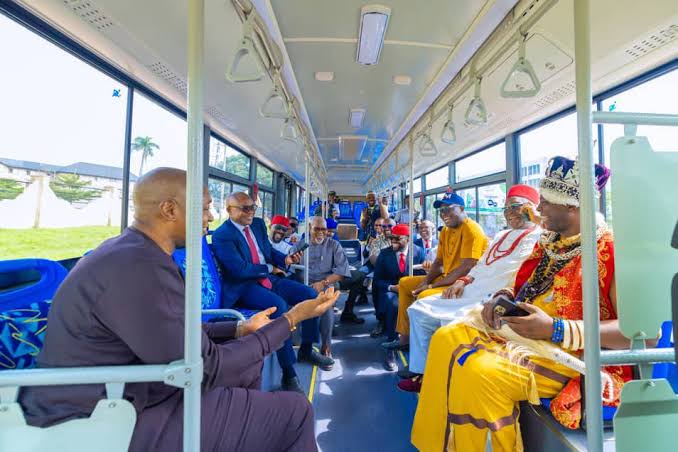
More importantly, the reform represents an investment in people.
It is an investment in the trader who needs to get goods to market, the student traveling to school, the civil servant going to work, the business owner moving around the city and the family trying to manage the rising cost of daily life.
For Enugu, the ultimate measure of this transformation will be how effectively these investments translate into affordable mobility, reduced congestion, improved safety, greater economic productivity and a better quality of life for residents.
CLICK HERE TO WATCH THE FULL VIDEO.
Enugu Is Moving Forward
The story of Enugu’s transportation transformation is ultimately a story about the future of the state.
As new infrastructure, modern buses, organized routes and smarter transportation solutions take shape, the objective is clear: to build a system that matches the aspirations of a modern Enugu.
Enugu is moving. And with the continuing transformation of its transport sector, the state is positioning itself for a more organized, connected and productive future.
Enugu Media Village,
Voice of Coal City, Beyond the Headlines!