
FCT Minister Says ADC Presidential Ticket May Struggle to Secure 25 Per Cent of Votes in Rivers State as Political Alignments Intensify Ahead of 2027 Polls.
Enugu Media Village (EMV), the Most Updated Online News Platform — October 9, 2026
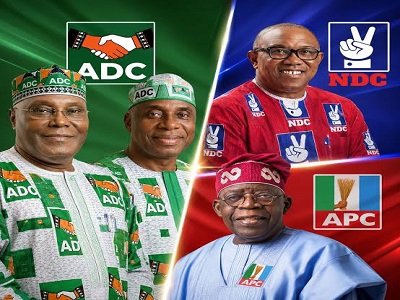
THE Minister of the Federal Capital Territory (FCT), Nyesom Wike, has questioned the electoral strength of the African Democratic Congress (ADC) presidential ticket of former Vice-President Atiku Abubakar and former Rivers State Governor Rotimi Amaechi, predicting that the opposition alliance would struggle to secure the constitutionally required 25 per cent of votes in Rivers State in the 2027 presidential election.
Wike made the remarks during engagements with community stakeholders in Obio-Akpor Local Government Area of Rivers State, where he renewed his support for President Bola Tinubu’s re-election bid and criticised the opposition ticket’s prospects in the state.
According to reports published by TheCable and other Nigerian media organisations, the FCT minister argued that Amaechi’s previous positions as governor, transportation minister and director-general of former President Muhammadu Buhari’s presidential campaigns did not automatically translate into the electoral support required to deliver Rivers State to the ADC.
Wike also challenged the opposition alliance to demonstrate its political strength through grassroots mobilisation, voter support and measurable electoral performance rather than relying solely on the profiles of prominent political figures.
Political Rivalry Intensifies Ahead of 2027
The exchange reflects the intensifying political competition ahead of Nigeria’s 2027 general elections, with political parties and influential figures working to consolidate support across the country.
The ADC ticket, featuring Atiku Abubakar and Rotimi Amaechi, faces the challenge of building a strong electoral coalition capable of competing with the ruling All Progressives Congress (APC) and other political parties.
For Rivers State, the contest carries particular significance because of the state’s political influence in the South-South region and its importance in the broader struggle for presidential votes.
Wike, a former governor of Rivers State, has continued to advocate support for President Tinubu, urging residents and political stakeholders to back the incumbent administration in the forthcoming election.
His comments also underscore the continuing political disagreements between influential figures whose alliances, party affiliations and electoral calculations are shaping the emerging campaign landscape.
Voters Will Ultimately Decide
Despite the strong political claims being made by prominent figures, the actual electoral strength of the competing parties will be determined by voters at the ballot box.
Political analysts generally assess electoral prospects through several factors, including party structures, candidate popularity, grassroots mobilisation, campaign organisation, public perception of governance and the ability to address citizens’ economic and security concerns.
As the 2027 election approaches, Nigerians will be watching how the major political parties present their programmes, engage communities and respond to public expectations.
For voters, the central consideration remains which candidates and policies offer credible solutions to the country’s challenges, including unemployment, rising living costs, insecurity and infrastructure deficits.
Enugu Media Village (EMV), the Most Updated Online News Platform — Informing Enugu, Connecting the World.
Promoting Accountability, Public Participation, Transparency and Good Governance.