
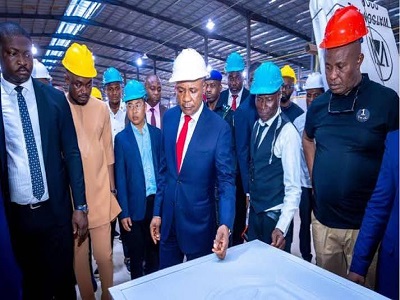
How the Mbah Administration Is Using Infrastructure, Agriculture, Industry, MSMEs, Energy and Investment to Reposition Enugu’s Economic Base.
Enugu Media Village (EMV), the Most Updated Online News Platform | September 22, 2026.
When Dr. Peter Ndubuisi Mbah assumed office as Governor of Enugu State in 2023, his administration set an unusually ambitious economic objective: to grow the state’s economy from an estimated $4.4 billion to $30 billion within four to eight years.
The figure was contained in Mbah’s original governing manifesto and has remained a central pillar of his administration’s economic agenda.
The target represents a substantial transformation of Enugu’s economic structure. But the important question in assessing the agenda is not simply whether the $30 billion figure has been reached — it has not been presented as an already achieved result — but what measurable changes have taken place since 2023, what investments are now in motion, and which elements remain targets for the years ahead.
That distinction matters.
A credible assessment of the administration’s economic programme requires separating what has happened from what government says it intends to achieve.
FROM A TARGET TO AN ECONOMIC STRATEGY
The $30 billion ambition was never presented as something government could achieve through public spending alone.

Governor Mbah has repeatedly described the strategy as one in which government creates the infrastructure, security, regulatory environment and human-capital conditions required for private-sector investment and economic expansion.
In a 2026 interview, Mbah explained that the administration’s economic vision was based on moving Enugu from $4.4 billion to $30 billion while making the state a destination for business, investment, tourism and living. He described the strategy as requiring a shift away from the traditional model of government-led growth towards private-sector-driven expansion.
The approach has consequently been spread across several interconnected sectors: roads and transport, agriculture, industrialisation, energy, technology, tourism, MSMEs, education, security and public-sector reform.
The logic is straightforward: infrastructure lowers the cost of movement; security protects investment; energy supports production; skills supply labour; agriculture supplies raw materials; industry creates value; and MSMEs distribute economic opportunity.
WHAT HAS BEEN ACHIEVED SO FAR?
One of the clearest measurable changes has been in the state’s internally generated revenue.
According to the Enugu State Internal Revenue Service, IGR increased from ₦26.8 billion in 2022 to ₦37.4 billion in 2023, ₦180.5 billion in 2024 and ₦406.77 billion in 2025. The state attributed the growth to digitalisation, electronic payments, expansion of the revenue base and measures aimed at reducing leakages.
IGR is not the same thing as GDP and therefore should not be presented as proof that Enugu’s economy has already grown to $30 billion.
Rather, it is an indicator of the state’s changing fiscal capacity.
For 2026, the government set an IGR target of ₦870 billion, making that figure a projection rather than an achieved result.
AGRICULTURE: FROM SUBSISTENCE TO COMMERCIAL PRODUCTION
Agriculture is one of the administration’s major economic pillars.
In July 2026, the state launched the distribution of fertilisers and other agricultural inputs to 63,000 registered smallholder farmers. Governor Mbah said agriculture was expected to account for about 40 per cent of the targeted economic growth, while the administration’s stated objective was to move farmers from subsistence production towards commercial agriculture.
The administration has also developed a large-scale agricultural infrastructure strategy involving a 300,000-hectare land bank, 260 planned 200-hectare farm estates, mechanisation, farm roads, irrigation, storage and agro-processing.
The 2026 budget presented the completion and full development of the 260 farm estates as a forward-looking target, with each estate planned to have warehouses, tractor sheds, irrigation, electricity and water infrastructure.
This distinction is important.
The distribution of inputs to 63,000 farmers is a reported intervention.
The full completion and operation of all 260 farm estates is a stated programme objective.
The economic test will ultimately be whether these investments produce higher yields, reduce post-harvest losses, create agro-processing businesses, increase farmer incomes and generate employment.
INDUSTRIALISATION: BRINGING PRODUCTION BACK TO ENUGU
Another component of the strategy is the revival of industrial production and attraction of new manufacturing investment.
A major example is the $20 million Haier factory inaugurated in Enugu in February 2026.
According to the Enugu State Government, the facility is designed to manufacture smartphones, tablets, computers, smart boards, televisions and technologies related to health, agriculture, transportation and renewable energy. Haier said the factory has a designed production capacity of 200,000 units annually and would employ more than 100 people when fully completed, with additional investment discussions potentially taking the group’s Enugu investment above $30 million.
The project also demonstrates another element of the government’s strategy: using public intervention to facilitate private investment.
The state provided land and constructed the factory structures, while placing offtake orders for technology products intended to support the state’s Smart Green Schools.
The administration says the factory is expected to facilitate technology transfer, technical training and the development of supporting businesses.
These are expected economic effects; the factory’s investment value and planned production capacity are documented facts.
TRACTORS, MANUFACTURING AND THE AGRICULTURAL VALUE CHAIN
Industrialisation is also being linked directly to agriculture.
In 2024, the administration flagged off the construction of the Nortra Tractor Assembly Plant and Service Centre, an investment involving ODK Group of Denmark. The project was presented as part of the state’s effort to increase access to agricultural mechanisation.

The strategic connection is significant.
A functioning agricultural economy requires more than farmers and farmland. It requires tractors, spare parts, storage, processing, transportation, irrigation, energy and markets.
The government’s stated model is therefore to build an interconnected agricultural value chain rather than treat farming simply as food production.
MSMEs: THE BROAD BASE OF THE ECONOMY
Large factories attract attention, but small businesses employ and support large numbers of people.
The Enugu MSME and Startup Agency reports that more than 100,000 enterprises have been mapped, while 18,244 grant recipients have received support since the programme began. The agency also reports more than ₦2.5 billion in grants facilitated and a statewide digital-skills programme that has trained tens of thousands of young people.
Its reported 2025 trade-fair figures provide another illustration of the government’s MSME strategy: the Enugu 042 Trade Fair recorded more than 32,000 attendees, ₦640 million in sales and over 1,100 jobs, according to the agency.
Again, these are programme and event figures rather than evidence that the entire state economy has already achieved the $30 billion target.
The broader objective is to build an enterprise ecosystem in which small businesses can access finance, skills, markets, technology and infrastructure.
ENERGY: THE INFRASTRUCTURE BEHIND INDUSTRIAL GROWTH
No serious industrialisation strategy can ignore electricity.
The administration has consequently linked its economic ambitions to the development of an electricity market capable of supporting businesses and investors.
Enugu’s electricity regulator has reported a state target of 690MW of generation capacity and 20-hour daily power supply by 2030, alongside efforts to establish the state’s electricity market following the Electricity Act 2023.
These figures are targets, not present-day performance figures.
Their significance lies in the fact that reliable electricity is being treated as an economic-development issue rather than merely a social-service issue.
For manufacturers, agro-processors, technology businesses and commercial enterprises, the availability and cost of electricity directly influence production costs and competitiveness.
INFRASTRUCTURE AS AN ECONOMIC ENGINE
The administration has also pursued an extensive road and transport programme.
In September 2026, the state government unveiled a compendium reporting more than 10,000 milestones, including over 1,521 kilometres of constructed and reconstructed roads, more than 7,000 classrooms and 260 Type-2 Primary Healthcare Centres.
Roads matter economically because they connect farms to markets, workers to businesses, communities to urban centres and manufacturers to suppliers and customers.
The 2026 budget therefore allocated substantial resources to the economic sector, including infrastructure, agriculture, transportation and industrial development. The budget proposed ₦1.617 trillion in total expenditure, with about 80 per cent earmarked for capital expenditure.
The budget also identified agriculture, industry and trade as central to the state’s objective of achieving substantial GDP expansion.
TOURISM AND THE SERVICE ECONOMY
Enugu’s economic strategy is not limited to manufacturing and agriculture.
The administration is also investing in tourism, transportation, hospitality and conference infrastructure as components of a broader service economy.
The government’s 2026 budget highlighted the International Conference Centre, tourism attractions, transport systems and the state’s aviation development as potential drivers of economic activity.
The argument is that visitors generate demand across multiple sectors — hotels, restaurants, transportation, retail, entertainment, event management and small businesses.
The 2026 budget’s projection of up to three million visitors annually is therefore a target, not a current visitor figure.
INVESTMENT ATTRACTION AND EASE OF DOING BUSINESS
The private sector is central to whether the $30 billion ambition can eventually be achieved.
In June 2026, Enugu State worked with the Presidential Enabling Business Environment Council and private-sector stakeholders on measures intended to reduce bureaucratic obstacles, streamline processes and improve the business environment.
The state has also entered into a strategic partnership with the United Nations Development Programme (UNDP) focused on development priorities including energy, digital transformation, tourism, trade and innovation. The UNDP described the partnership as supporting Enugu’s ambition of becoming a $30 billion economy.
These partnerships are important because attracting investment is not solely about announcing projects. Investors also consider security, infrastructure, regulation, taxation, access to land, energy, skilled labour and market opportunities.
JOB CREATION: WHERE ECONOMIC GROWTH MEETS THE PEOPLE
Ultimately, GDP figures mean little to households if economic expansion does not translate into employment and income opportunities.
The administration’s employment strategy therefore cuts across several sectors.
The Haier factory has a stated initial employment capacity of more than 100 workers, with additional positions expected as the investment expands.
Agricultural programmes are designed to support tens of thousands of farmers.
MSME grants and digital-skills programmes target entrepreneurs and young people.
Industrial projects such as tractor assembly are designed to create both direct employment and supporting businesses.
Infrastructure construction itself also generates employment through contractors, artisans, engineers, suppliers and service providers.
The more difficult question is how many of these opportunities translate into sustained, productive jobs rather than temporary construction employment or short-term programme participation. That is an area where continued measurement will be necessary.
THE $30 BILLION QUESTION
So, where does the $30 billion ambition stand?
The available evidence does not establish that Enugu has already reached $30 billion. The $30 billion figure remains the administration’s medium-to-long-term economic target.
What can be documented is that the administration has pursued several of the structural changes it says are necessary to reach that target.
These include:
- Significant growth in internally generated revenue;
- Major road and transport infrastructure investment;
- Agricultural input support and planned farm estates;
- Industrial and foreign investment projects;
- MSME grants and entrepreneurship programmes;
- Digital-economy initiatives;
- Energy-market reforms;
- Investment-enabling partnerships;
- Revival of selected moribund state assets;
- Human-capital investments intended to supply a skilled workforce.
At the same time, several headline objectives remain targets or projections, including the $30 billion GDP ambition, the completion and full operation of all 260 farm estates, 690MW electricity generation capacity, 20-hour power supply by 2030 and the projected expansion of tourism.
That distinction strengthens rather than weakens the economic story because it allows residents to measure progress against clearly defined objectives.
WHAT THE NEXT PHASE MUST DELIVER
The next stage of Enugu’s economic transformation will require more than announcing projects.
The state will need to demonstrate sustained private investment, productive jobs, rising household incomes, competitive businesses, increased agricultural output, functioning industrial facilities, reliable electricity and measurable improvements in the ease of doing business.
It will also need to ensure that increased government revenue does not place excessive pressure on businesses and households.
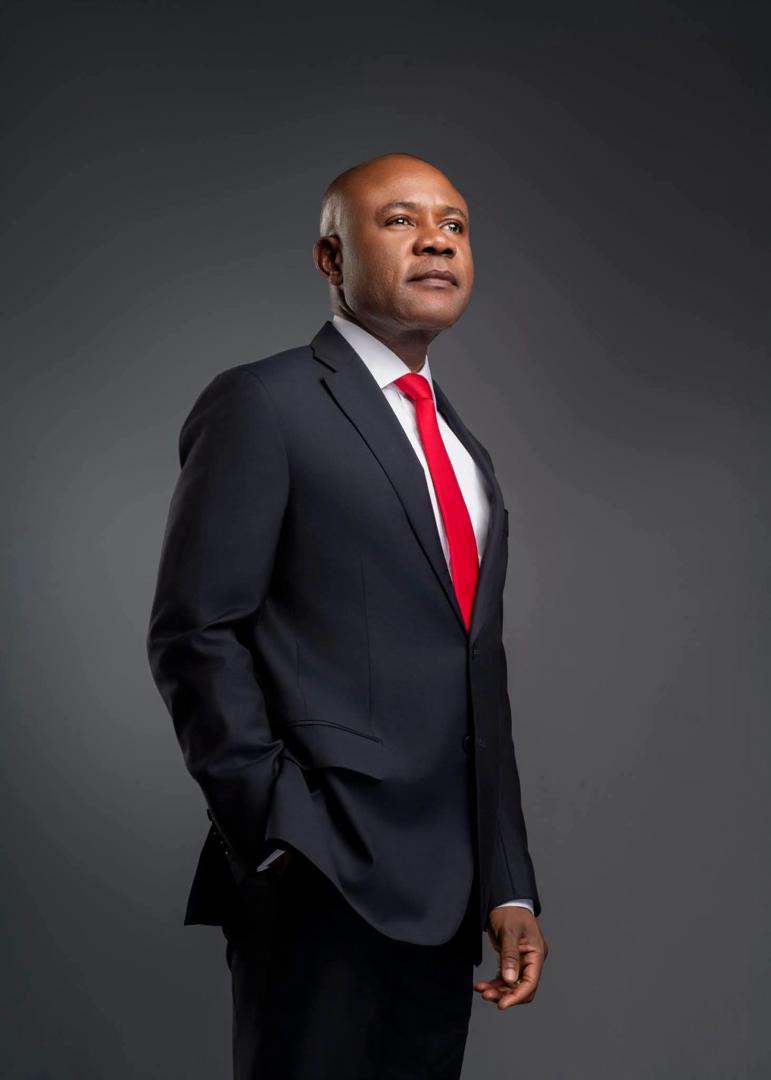
That concern has been raised publicly. A 2025 Guardian report documented complaints from some residents and businesses about the state’s revenue-collection drive, while government officials maintained that the taxes and levies were lawful and that the revenue was being deployed to infrastructure and public services.
For the economic transformation agenda to remain sustainable, therefore, revenue growth and business growth will need to advance together.
FROM VISION TO MEASURABLE ECONOMIC TRANSFORMATION
The central economic proposition of the Mbah administration is clear: Enugu should not depend primarily on government spending to grow; government should create the conditions under which private capital, agriculture, manufacturing, technology, tourism and entrepreneurship can expand.
The evidence available in 2026 shows significant activity in that direction, from the reported increase in IGR to new industrial investments, agricultural programmes, MSME interventions, infrastructure development and partnerships with organisations such as UNDP and PEBEC.
But the $30 billion destination remains a goal.
The credibility of the roadmap will ultimately depend on whether the investments being made today produce sustained economic output, productive employment, stronger businesses and improved living standards over the remaining years of the administration’s programme.
That is the economic story of Enugu worth following: not simply the size of the target, but the measurable distance between the $4.4 billion baseline, the reforms and investments already recorded, and the $30 billion ambition still ahead.
Enugu Media Village (EMV), the Most Updated Online News Platform — Informing Enugu, Connecting the World; Promoting Accountability, Public Participation, Transparency and Good Governance.