
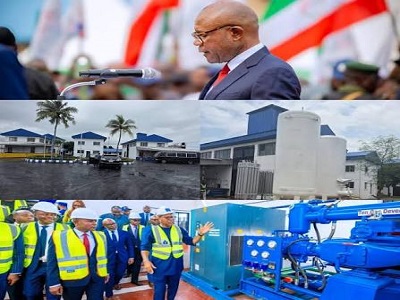
From Nigergas to palm processing and technology manufacturing, Enugu’s renewed industrial drive seeks to transform dormant assets into engines of jobs, investment and sustainable economic growth.
Enugu Media Village (EMV), the Most Updated Online News Platform | September 21, 2026.
ENUGU — For decades, some of Enugu State’s once-promising industrial and commercial assets stood as reminders of an era when the state played a significant role in the economic and industrial development of the old Eastern Region.
Today, the conversation is gradually changing.
Under the administration of Governor Dr. Peter Ndubuisi Mbah, several dormant or underutilised assets are being repositioned with the stated objective of transforming them from abandoned facilities into productive economic centres capable of attracting investment, supporting businesses and creating employment.
The approach forms part of the administration’s broader economic vision of moving Enugu towards a more productive, investment-driven economy.
FROM ABANDONMENT TO PRODUCTIVITY
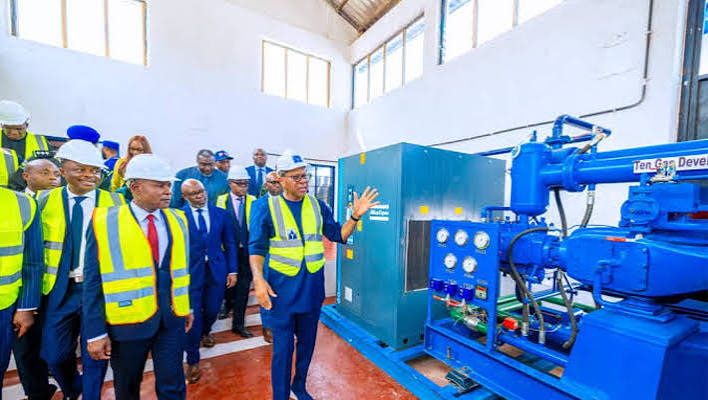
One of the clearest examples is Nigergas Company Limited, an enterprise established in 1962 that remained dormant for more than three decades before being revamped by the Mbah administration.
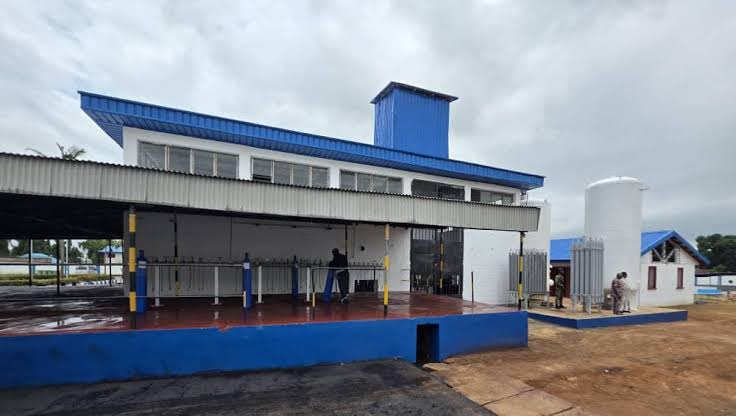
The facility was re-inaugurated in 2025 following its rehabilitation. The state government reported that the revived company had created more than 100 direct jobs, with thousands of additional indirect employment opportunities expected across distribution, fabrication, transportation and related supply chains.
Beyond Nigergas, the administration has also pursued the revival of other legacy assets, including Enugu United Palm Products Limited and Sunrise Flour Mills, with the objective of reconnecting production with agriculture and the wider value chain.
The significance goes beyond reopening buildings.
The larger economic question is whether dormant infrastructure can once again become part of a functioning production ecosystem — linking farmers, manufacturers, workers, logistics providers, investors and consumers.
FROM FACTORIES TO VALUE CHAINS
The revival strategy is also increasingly being linked with private-sector participation.
The Enugu United Palm Products initiative, for instance, is connected to the revival of previously abandoned palm plantations, creating the possibility of integrating agricultural production with processing and industrial activity. Recent reports indicate that the company has commenced commercial production and is planning further investment in processing infrastructure.
That model is important because industrialisation is not simply about putting a factory back into operation.
It requires raw materials, skilled workers, electricity, transportation, markets, technology, financing and stable demand.
Where these elements work together, an industrial facility can generate economic activity far beyond its physical location.
THE ‘MADE IN ENUGU’ DIMENSION
The industrial revival agenda has also taken a new direction with the emergence of fresh manufacturing investments.
In February 2026, the Enugu State Government inaugurated a $20 million Haier factory, with the company stating that the facility is designed to produce ICT products, smart devices, medical technologies and renewable-energy solutions, with an annual production capacity of up to 200,000 units.
The investment is particularly significant because it connects manufacturing with technology, education and skills development.
According to the state government, the partnership also involves technology and training opportunities, while products from the factory are expected to support the state’s Smart Green Schools initiative.
This represents a different industrial proposition for Enugu: not merely restoring what existed in the past, but using existing economic foundations to build new industries suited to today’s economy.
REVIVING THE INDUSTRIAL SPIRIT
The administration’s reported milestones now include more than 10,000 achievements across sectors, with the state government specifically identifying the revamp of moribund assets as part of the broader development record.
For Enugu, the industrial revival conversation therefore goes beyond individual factories.
It is about whether assets that once represented economic potential can be converted into functioning enterprises; whether agriculture can feed industry; whether industry can create jobs; and whether private investment can be attracted into an economy with stronger infrastructure and improved business systems.
Governor Mbah has repeatedly linked the industrial strategy to the broader ambition of growing Enugu’s economy and positioning the state as an investment destination.
A NEW CHAPTER FOR ENUGU
The story of Enugu’s industrial revival is still unfolding.
The sustainability of the projects will ultimately depend on factors including operational efficiency, private-sector participation, market demand, infrastructure, workforce development and consistent policy implementation.
But the direction is increasingly visible: assets that spent years in dormancy are being brought back into economic conversation, while new investments are being added to the state’s industrial landscape.
From Nigergas to palm processing, from flour production to technology manufacturing, the emerging picture is one of an Enugu seeking to move from an economy built largely around commerce and consumption towards one with a stronger production and industrial base.
For Ndi Enugu, the real measure will be what these investments ultimately deliver in terms of jobs, businesses, skills, local production and sustainable economic opportunities.
That is where the industrial revival agenda will have its greatest impact — not simply in the reopening of factories, but in whether those factories become engines of shared economic activity for years to come.
Enugu Media Village (EMV), the Most Updated Online News Platform — Informing Enugu, Connecting the World.