
Enugu Media Village (EMV), the Most Updated Online News Platform. — November 19, 2026.
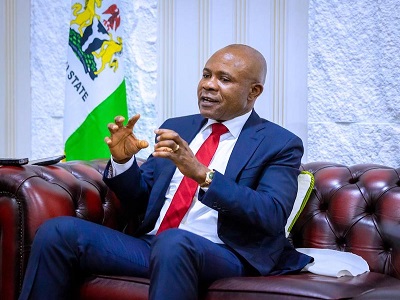
LEADERSHIP IS ULTIMATELY measured not merely by the promises made or the visions articulated, but by the tangible improvements those visions bring to the lives of the people. In Enugu State, the administration of Governor Peter Ndubuisi Mbah is increasingly defining its leadership narrative around this principle: transforming ideas into policies, policies into projects, and projects into measurable development outcomes.
Since assuming office in May 2023, Governor Mbah has consistently presented an ambitious development agenda aimed at repositioning Enugu from a predominantly civil-service-dependent economy into a thriving, productive, investment-driven and globally competitive state.
His vision, captured in the administration’s long-term ambition of growing Enugu’s economy from approximately ₦4.4 billion to a $30 billion economy, is anchored on economic expansion, infrastructure renewal, human capital development, technological innovation, agricultural transformation, security and improved public service delivery.
But beyond the ambition itself, the defining question is how much of this vision is becoming visible in the everyday experiences of Ndi Enugu.
From Infrastructure Deficit to a New Development Landscape
One of the most visible expressions of the Mbah administration’s vision is its aggressive investment in infrastructure. Recognising that roads, transportation networks and public facilities are essential foundations for economic growth, the government has prioritised road construction, rehabilitation and urban renewal across the state.
The administration has reported the construction and rehabilitation of more than 1,500 kilometres of roads, alongside interventions in urban centres and rural communities. These projects are designed to improve connectivity, reduce travel time, facilitate the movement of agricultural produce, stimulate commercial activities and open up previously underserved communities.
The transformation of major transport terminals, including Holy Ghost, Gariki, Abakpa and Nsukka, also reflects a broader strategy to modernise public transportation and improve the experience of commuters.
The introduction of CNG-powered buses further demonstrates the government’s commitment to developing a more organised and sustainable transportation system.
Education: Investing in the Future of Enugu
Governor Mbah’s development philosophy recognises that sustainable prosperity cannot be achieved without investing in the next generation.
Through the Smart Green Schools initiative, the administration is pursuing a comprehensive transformation of the education vision , with plans for 260 modern schools equipped with technology-enabled learning facilities and improved educational infrastructure.
The initiative goes beyond constructing classrooms. It seeks to create an educational environment where children can acquire relevant knowledge, develop critical thinking abilities and prepare for the demands of a rapidly changing global economy.
The government’s investment in thousands of classroom facilities, alongside reforms in teaching, learning and educational administration, reinforces its ambition to make Enugu a centre of educational excellence.
The emphasis is clear: the future of Enugu must be built through the knowledge, skills and opportunities available to its young population.
Healthcare: Bringing Quality Services Closer to the People
Another important pillar of the administration’s development agenda is healthcare delivery.
The establishment and upgrading of 260 Type-2 Primary Healthcare Centres across the state represent a significant component of the government’s efforts to strengthen grassroots healthcare.
These facilities are intended to improve access to essential medical services, maternal and child healthcare, preventive medicine and basic treatment, particularly for residents of rural and underserved communities.
By strengthening primary healthcare, the administration is pursuing a system that places greater emphasis on prevention, accessibility and early intervention rather than relying exclusively on major hospitals.
Economic Diversification: Building an Investment-Friendly Enugu
A central feature of Mbah’s vision is the determination to expand Enugu’s economic base beyond traditional sources of revenue.
The administration has continued to pursue investments in manufacturing, agriculture, aviation, tourism and other productive sectors.
The establishment of the $20 million Haier manufacturing facility represents an important milestone in the state’s industrialisation drive, with the potential to support local production, employment opportunities and technology transfer.
In agriculture, the government’s land-bank initiative, mechanisation programme and partnerships with agricultural stakeholders are designed to unlock the state’s agricultural potential, strengthen food security and encourage large-scale commercial farming.
The partnership with private-sector investors and agricultural operators further reflects an understanding that government cannot independently deliver the full scale of economic transformation envisioned for the state.
Aviation and Tourism: Connecting Enugu to the World
The establishment of Enugu Air has also become an important component of the administration’s economic repositioning strategy.
Beyond providing air transportation, the state-owned airline is intended to strengthen connectivity, attract investors, facilitate business activities and position Enugu as a major destination for tourism and commerce.
Its expanding domestic and international ambitions, including the announced London Gatwick operations, demonstrate the administration’s determination to improve the state’s connection with global markets.
Similarly, the government’s investment in tourism infrastructure and the ambition to attract millions of visitors annually reflect a broader strategy to turn Enugu’s cultural heritage, hospitality industry and natural attractions into economic assets.
Security and Technology: Creating an Enabling Environment
No meaningful development can thrive without security.
Recognising this reality, the Mbah administration has invested in technology-driven security infrastructure, including the Smart Green Security architecture and AI-enabled security vehicles.
The objective is to strengthen surveillance, improve intelligence gathering, enhance emergency response and support security agencies in protecting lives and property.
This approach reflects a growing recognition that modern governance requires the strategic application of technology to public safety and service delivery.
Governance, Accountability and Long-Term Planning
Beyond physical projects, another defining feature of the administration is its emphasis on planning, performance monitoring and institutional reforms.
The introduction of Project Meter provides a framework for tracking government projects and monitoring implementation progress.
The administration has also pursued a 25-year development vision extending to 2051, demonstrating an effort to establish a long-term framework that transcends individual political tenures.
This is particularly important because sustainable development requires continuity, institutional discipline and policies capable of delivering results beyond immediate political cycles.
The administration’s engagement with stakeholders, traditional institutions, religious leaders, professional groups and community representatives also underscores the importance of public participation in governance.
From Vision to Impacts: The Bigger Picture
Perhaps the most significant aspect of the Mbah administration’s development philosophy is the attempt to connect individual projects to a larger economic objective.
Roads are expected to stimulate commerce. Modern schools are expected to produce a skilled workforce. Improved healthcare is expected to strengthen human capital. Agricultural investments are expected to improve food security and create jobs. Industrialisation is expected to expand economic opportunities, while aviation and tourism are expected to attract investment and increase economic activity.
This interconnected approach is what gives the administration’s development agenda its broader significance.
However, the ultimate measure of success must go beyond the number of projects announced, commissioned or completed. It must include the quality of those projects, their sustainability, their distribution across communities and the extent to which ordinary residents experience meaningful improvements in their living conditions.
Employment opportunities, affordable living, improved household incomes, accessible healthcare, quality education and a secure environment remain essential indicators by which Ndi Enugu will assess the administration’s performance.
Conclusion: A Vision Still Unfolding
The story of Governor Peter Mbah’s leadership is a continuing journey from ambition to implementation and from policy direction to measurable impact.
His administration has placed before Ndi Enugu an ambitious development proposition: a more prosperous, economically diversified, technologically advanced and globally connected state.
The task ahead is to sustain the momentum, strengthen accountability, deepen inclusive development and ensure that the benefits of government investments reach every community.
For Enugu, the aspiration is bigger than infrastructure, bigger than political promises and bigger than individual projects. It is about building a state where opportunities are accessible, businesses can thrive, young people can fulfil their potential and future generations can inherit a stronger economy.
From Vision to Impacts — the real test of leadership is not simply what is imagined, but what is delivered and what endures.
Enugu Media Village (EMV), the Most Updated Online News Platform, remains committed to informing Ndi Enugu, promoting accountability, encouraging public participation and connecting the world to the unfolding development story of Enugu State.
Informing Enugu, Connecting the World.