
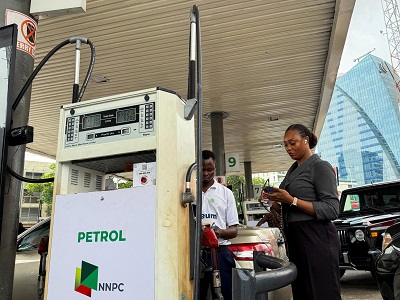
Government Begins Price-Stabilisation Talks as NNPC Plans 30-Day Petrol Discount at Its Stations.
Enugu Media Village (EMV), the Most Updated Online News Platform — October 9, 2026
The Federal Government has proposed negotiating a ceiling of ₦1,350 per litre on the ex-gantry or landing cost of petrol as part of fresh measures aimed at reducing fuel-price volatility and easing the economic pressure on Nigerian households and businesses.
The Minister of Finance and Coordinating Minister of the Economy, Taiwo Oyedele, announced the proposal during a press briefing in Abuja on Thursday, October 8, explaining that the planned mechanism is designed to moderate the effects of fluctuations in international crude oil prices and foreign exchange rates on domestic petrol costs.
Importantly, the proposed ₦1,350 ceiling is not an approved nationwide petrol pump price. The announcement concerns the cost of petrol at the ex-gantry or landing stage, rather than a directive requiring every filling station in Nigeria to sell petrol at ₦1,350 per litre.
According to reports by Premium Times and the Presidency, negotiations are still central to the proposed arrangement, under which refiners and importers would temporarily absorb costs exceeding the agreed ceiling and recover the difference later when market conditions become more favourable.
How the Proposed Price-Stabilisation Mechanism Would Work
Under the plan outlined by Oyedele, the government intends to reduce the immediate impact of sudden increases in crude oil prices and exchange rates on petrol costs.
If the arrangement is agreed and implemented as proposed, refiners and importers would bear the additional costs whenever the actual cost of supplying petrol rises above the ceiling. They would subsequently recover the difference when market conditions permit.
The minister said the approach is intended to smooth price movements over time rather than force prices below their underlying costs.
He also indicated that the ceiling would be reviewed monthly and that relevant figures would be published to promote transparency.
The proposal is particularly significant at a time when higher global oil prices and supply disruptions are putting pressure on fuel costs, transportation fares and the prices of goods and services across Nigeria.
However, the practical impact on consumers will depend on the final terms of the agreement, its implementation and how changes in the cost of supplying petrol are reflected in retail prices.
FG Rules Out Return to Blanket Fuel Subsidy
The Federal Government has maintained that the proposed mechanism does not amount to a restoration of the blanket petrol subsidy removed in May 2023.
Oyedele explained that the objective is to moderate sudden price increases without returning to the previous subsidy arrangement.
The Presidency has similarly stated that the new interventions are intended to cushion the effects of rising energy costs while preserving the government’s broader petrol-market reforms.
The distinction is important because the proposed arrangement would involve the temporary absorption and later recovery of excess costs by refiners and importers, rather than a blanket government payment designed to keep petrol prices below market costs.
The government says this approach could provide greater predictability for businesses and households, particularly where sharp fuel-price increases lead to higher transport fares and logistics expenses.
NNPC Announces Separate 30-Day Petrol Discount
In a related but separate measure, the Nigerian National Petroleum Company Limited (NNPCL) has agreed to forgo its retail profit margin on petrol sold through its retail outlets for an initial period of 30 days.
The Presidency announced the arrangement on October 9, saying NNPC Retail would sell petrol at cost during the period, with priority given to commercial transport operators.
Under the arrangement described by the Presidency, if NNPC’s landing cost is ₦1,300 per litre, the company would sell the product at that cost rather than add its retail profit margin.
This temporary discount is distinct from the proposed ₦1,350 ex-gantry ceiling. The discount applies to NNPC’s retail operations, while the proposed ceiling concerns negotiations over the underlying landing cost of petrol.
The government hopes that the intervention will help ease pressure on transport operators and households, although its wider impact will depend on implementation and the extent to which any savings are passed on to passengers and consumers.
Other Measures to Reduce Transport and Living Costs
The proposed petrol-cost ceiling and NNPC discount form part of a broader package of measures announced by the Federal Government.
Other interventions include plans for forward sales of crude oil to domestic refineries, an accelerated rollout of compressed natural gas (CNG), increased support for vulnerable households and small businesses, and efforts to curb illegal road levies that raise transportation and logistics costs.
The government has also announced plans for a National Strategic Fuel Reserve intended to help manage supply disruptions and reduce the risk of artificial scarcity.
According to the Presidency, the measures are designed to ease the immediate burden of rising energy costs without reversing the petrol-subsidy reforms introduced in 2023.
What Nigerians Should Know
For motorists, transport operators, traders and other fuel consumers, the immediate takeaway is that the proposed ₦1,350 figure should not be mistaken for a confirmed nationwide pump price.
The Federal Government has announced negotiations over an ex-gantry or landing-cost ceiling, while NNPC has separately agreed to a temporary retail-margin discount at its stations.
Until further implementation details are confirmed, petrol prices at filling stations should not be assumed to have been uniformly fixed at ₦1,350 per litre.
The effectiveness of the proposed measures will ultimately be judged by whether they help reduce sharp fuel-price fluctuations, moderate transport fares and ease the cost of doing business for Nigerians.
Enugu Media Village (EMV) will continue to monitor official announcements and provide verified updates on petrol prices and the implementation of the Federal Government’s relief measures.
Enugu Media Village (EMV) — Informing Enugu, Connecting the World.