
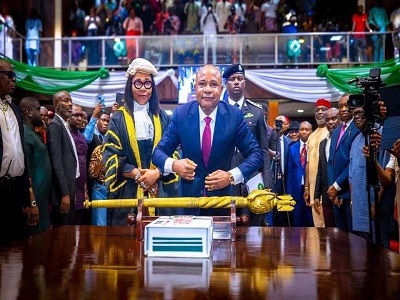
Lawmakers Back Decentralised Policing to Strengthen Community Security, Improve Intelligence Gathering and Protect Lives and Property.
Enugu Media Village (EMV), the Most Updated Online News Platform — October 26, 2026.
THE ENUGU State House of Assembly has passed a resolution supporting the proposed amendment of the 1999 Constitution of the Federal Republic of Nigeria to provide for the establishment of State Police Services, marking another step in the ongoing national debate over policing reform.
The resolution was passed during plenary on Tuesday, October 20, 2026, presided over by the Speaker of the House, Rt. Hon. Uche Ugwu, as lawmakers considered the proposed constitutional changes intended to decentralise Nigeria’s policing structure and strengthen responses to security challenges across the country.
The development comes amid growing calls for a security framework that enables states to respond more effectively to local threats, improve intelligence gathering and enhance the protection of lives and property.
LAWMAKERS HIGHLIGHT POTENTIAL SECURITY BENEFITS
Speaking in support of the proposed amendment, Hon. Chima Obieze, who represents Ezeagu State Constituency, described the initiative as a significant step towards reforming Nigeria’s security architecture.
He argued that decentralising policing could improve the responsiveness of security operations and strengthen the capacity to address security threats within local communities.
Similarly, Hon. Okey Mbah, representing Nkanu East State Constituency, expressed the view that State Police could help address persistent security challenges, including attacks on farming communities and other forms of violence.
He cited previous security incidents, including the attack on Nimbo community, as examples of the need for more effective intelligence gathering and timely responses to threats.
The lawmakers’ contributions reflected the broader argument advanced by proponents of State Police: that security arrangements closer to the communities they serve could improve local intelligence, strengthen coordination and facilitate faster responses to emerging threats.
SPEAKER EMPHASISES THE NEED FOR SECURITY REFORM
Speaker Uche Ugwu announced the Assembly’s support for the proposed constitutional alteration, noting the importance of addressing Nigeria’s internal security challenges.
The resolution aligns with the ongoing national legislative process aimed at creating a legal framework for Federal and State Police Services to operate within their respective constitutional responsibilities.
Supporters of the reform maintain that a decentralised policing structure could enable security agencies to develop a better understanding of local conditions and respond more effectively to crimes and threats affecting individual communities.
CALLS FOR SAFEGUARDS AGAINST POSSIBLE ABUSE
While supporting the proposed reform, some lawmakers also raised concerns about the need to prevent political interference and ensure that State Police operate professionally and in accordance with the law.
Hon. Harrison Ogara, representing Igbo-Eze South Constituency, cautioned that state-controlled policing structures could be vulnerable to misuse if adequate safeguards were not established.
He highlighted the importance of accountability, sustainable funding, professional standards and effective oversight to prevent the proposed institution from being used to intimidate political opponents or suppress legitimate dissent.
These concerns form part of the wider national debate over State Police, with questions surrounding recruitment, operational independence, human rights protection and the relationship between federal and state security institutions remaining central to the proposed reform.
WHAT HAPPENS NEXT?
The Enugu Assembly’s resolution represents support for the proposed constitutional amendment; it does not, by itself, establish an operational State Police Service.
Under Section 9(2) of the 1999 Constitution, a constitutional alteration generally requires approval by at least two-thirds of all State Houses of Assembly, representing 24 of Nigeria’s 36 states, before proceeding through the remaining constitutional steps, including presidential assent where required.
Consequently, the proposed State Police framework must complete the prescribed constitutional process before it can take effect. Subsequent legislation and appropriate institutional arrangements will also be necessary to provide the legal and operational framework for implementation.
A SIGNIFICANT DEVELOPMENT IN NIGERIA’S SECURITY DEBATE
The Enugu State House of Assembly’s position adds to the ongoing national conversation about how Nigeria can strengthen its security architecture amid persistent challenges, including kidnapping, communal violence, attacks on rural communities and other criminal activities.
For Ndi Enugu, the central issue remains the effective protection of lives and property, regardless of the policing model ultimately adopted.
As the constitutional amendment process continues, public attention will focus on the proposed framework’s ability to improve security while safeguarding citizens’ rights, maintaining accountability and preventing the misuse of law enforcement powers.
The success of any policing reform will ultimately depend on effective implementation, adequate funding, professional conduct, public trust and respect for the rule of law.
Enugu Media Village (EMV), the Most Updated Online News Platform, will continue to monitor constitutional developments, security reforms and legislative decisions affecting Enugu State and Nigeria.
Informing Enugu, Connecting the World.