
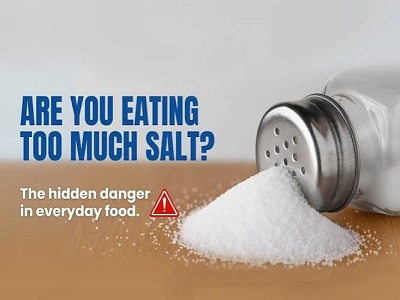
Understanding the Hidden Health Risks of Excessive Salt Consumption and Simple Ways to Cut Back.
Enugu Media Village (EMV), the Most Updated Online News Platform | September 22, 2026.
Salt is a common ingredient in almost every kitchen, helping to enhance the taste of food and preserve certain foods. However, while the body needs a small amount of sodium to function properly, consuming too much can become a health concern.
Sodium, one of the main components of salt, plays important roles in maintaining fluid balance, supporting nerve function and helping muscles work properly. The problem arises when sodium intake consistently exceeds the body’s needs.
According to public-health guidance, adults should generally consume less than 5 grams of salt per day, equivalent to less than about one teaspoon. This includes salt added during cooking and eating, as well as sodium already present in processed and packaged foods.
Why Too Much Salt Can Be a Problem
One of the major concerns associated with excessive sodium intake is its relationship with high blood pressure. High sodium consumption can cause the body to retain more water, increasing the volume of blood circulating through the blood vessels and potentially raising blood pressure.
Over time, uncontrolled high blood pressure can increase the risk of serious cardiovascular problems, including heart disease and stroke.
Excessive sodium intake has also been associated with increased risk of kidney problems in susceptible individuals. Because the kidneys help regulate sodium and fluid levels in the body, consistently high sodium intake can place additional demands on them.
Where Does Most of the Salt Come From?
Many people assume that most of their salt comes from the salt shaker. In reality, sodium can come from several sources.
Common sources include:
- Instant noodles and other highly processed foods
- Stock cubes and seasoning powders
- Processed meats and sausages
- Salted snacks and fast foods
- Canned and packaged foods
- Bread and baked products
- Sauces and condiments
- Smoked, dried and heavily salted foods
- Salt added during cooking or at the table
For many households, the challenge is therefore not simply removing the salt shaker but paying attention to the overall diet.
How Can You Reduce Your Salt Intake?
Reducing salt does not necessarily mean eating tasteless food. Small changes can make a significant difference.
1. Taste before adding extra salt.
Avoid automatically adding salt to food before tasting it.
2. Reduce dependence on seasoning cubes and powders.
Use them sparingly and explore natural herbs, vegetables, garlic, ginger, onions and other spices to improve flavour.
3. Eat more fresh foods.
Fresh vegetables, fruits, beans, unprocessed grains and fresh meats generally give you greater control over how much sodium goes into your meals.
4. Read food labels.
When buying packaged foods, check the sodium content and compare similar products where possible.
5. Limit highly processed foods.
Frequent consumption of processed and fast foods can make it easier to consume more sodium than intended.
6. Gradually reduce salt.
Your taste preferences can adapt. Cutting back gradually may make it easier to maintain a lower-sodium diet over time.
What About Traditional Nigerian Meals?
Many Nigerian meals can be part of a healthy diet. The issue is often how much salt, seasoning, processed ingredients and salted foods are used in preparing them.
Soups, stews, rice dishes, beans and other popular meals can be prepared with less salt while retaining flavour through vegetables, herbs and natural spices.
This does not mean that people need to completely eliminate salt from their diets. Rather, the goal is moderation and awareness.
Who Should Be Particularly Careful?
People who have been diagnosed with high blood pressure, kidney disease, heart disease or certain other medical conditions may need specific dietary advice from a qualified healthcare professional.
Anyone concerned about their blood pressure or overall sodium intake should speak with a doctor, dietitian or other qualified healthcare provider rather than relying solely on self-diagnosis.
Small Changes, Long-Term Benefits
Healthy living is rarely about making one dramatic change overnight. It is often about developing sustainable habits—eating more fresh foods, staying physically active, drinking enough water, maintaining a healthy weight, getting adequate sleep and keeping track of important health indicators.
Reducing excessive salt intake can be one of those simple lifestyle changes.
The next time you reach for the salt shaker or add another seasoning cube, pause and ask: Do I really need it?
Your taste buds may adjust, but the potential benefits of a healthier eating pattern can last much longer.
Enugu Media Village (EMV) — Informing Enugu, Connecting the World. Promoting Accountability, Public Participation, Transparency and Good Governance.