
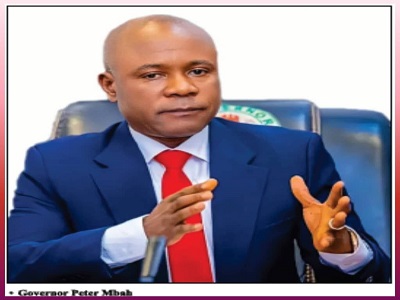
Beyond the “Elitist” Narrative: How Enugu’s Development Agenda Is Reaching Across Social and Economic Classes.
Enugu Media Village (EMV), the Most Updated Online News Platform | September 12, 2026.
By: Francis Ede.
Recent criticisms of Governor Peter Ndubuisi Mbah’s administration have increasingly centred on the nature and location of some of the projects being executed across Enugu State, with some critics describing the administration’s development agenda as “elitist.”
While criticism remains an important component of democratic governance, a careful assessment of the projects and policies implemented by the Mbah administration presents a broader picture—one that cuts across social classes, economic interests and geographical locations.
The argument that the administration is designed primarily to serve the affluent appears difficult to reconcile with the range of programmes and infrastructure being delivered across the state.
At the heart of Governor Mbah’s development philosophy is an ambitious attempt to reposition Enugu from a state constrained by poverty, infrastructural deficits and underdevelopment into a competitive, productive and investment-friendly economy.
The question, therefore, should not simply be whether a project is located in an affluent area or carries an aesthetically appealing design. The more important question is: What economic, social and developmental value does the project create for the people of Enugu State?
And on this score, the administration’s projects reveal benefits that extend far beyond any single social class.
A Government for All
The popular call to “let the poor breathe” is undoubtedly legitimate. Poverty imposes enormous burdens on individuals and families, and government has a responsibility to provide social protection, opportunities and basic services for vulnerable citizens.
But the rich also constitute part of society and have legitimate interests in a functional economy, secure environment, reliable infrastructure and quality public services.
As the popular Igbo proverb puts it: “Let the eagle perch and let the kite perch; whoever prevents the other from perching, may its wings break.”
A successful government must therefore create an environment where everyone can thrive.
Governor Mbah’s administration appears to have embraced this broader philosophy by pursuing projects that simultaneously address immediate social needs and create the economic foundations necessary for long-term prosperity.
Security: A Benefit Without Social Boundaries
Security of lives and property is perhaps one of the clearest examples of a government programme that benefits everyone, regardless of income or social status.
Before the Mbah administration, Enugu faced serious security challenges, including the disruption caused by the Monday sit-at-home order, attacks attributed to criminal elements, kidnapping and clashes affecting farming communities and major transportation routes.
The administration’s determination to restore normalcy and strengthen security coordination has significantly changed the operating environment for residents, businesses and visitors.
The government has also pursued closer collaboration among the police, Department of State Services, military, civil defence authorities and local security structures through coordinated operations.
The deployment of technology-driven security infrastructure, including AI-enabled surveillance vehicles with capabilities such as facial and number-plate recognition, GPS tracking and live transmission to a command centre, further demonstrates an attempt to modernise the state’s security architecture.
The benefits are universal.
A secure Enugu is good for the trader, farmer, civil servant, entrepreneur, investor, student and professional alike.
Infrastructure That Supports the Economy
The same principle applies to infrastructure.
Road construction and rehabilitation across the state have improved connectivity between communities, reduced travel difficulties and created a more conducive environment for commerce and economic activity.
The reported construction and rehabilitation of hundreds of roads have implications beyond transportation. Better roads mean easier movement of agricultural produce, access to markets, improved business operations and greater connectivity between rural and urban communities.
These benefits ultimately affect both the wealthy and the economically disadvantaged.
Power and Economic Productivity
Energy remains one of the critical foundations of economic development.
The state government’s intervention in the electricity sector and efforts to reduce the burden of electricity costs have implications for households, small businesses, medium-scale enterprises and larger industries.
For small businesses, lower energy costs can mean improved profitability and greater capacity to employ workers.
For larger industries, reliable and affordable electricity can support production, investment and expansion.
Thus, an intervention that may initially appear economic in nature can eventually translate into jobs and improved household incomes.
Water for Every Community
Access to potable water is another area where the distinction between the rich and the poor becomes less relevant.
The administration’s expansion of water production and distribution capacity is aimed at increasing access to water across Enugu State.
Whether in a high-income neighbourhood or a rural community, access to clean and reliable water remains a fundamental public necessity.
Projects That Attract Investment and Tourism
Critics may point to facilities such as the International Conference Centre, hotels and other high-end infrastructure as evidence of an administration serving the affluent.
But such an interpretation overlooks the wider economic ecosystem created by these investments.
Modern conference facilities, hotels, transportation infrastructure and improved tourism assets can attract conferences, businesses, investors and visitors into the state.
When visitors arrive, they spend money on transportation, accommodation, food, entertainment and other services.
The resulting economic activity creates opportunities for hotel workers, drivers, traders, artisans, food vendors, tour operators and other service providers.
The objective, therefore, should not simply be to ask who uses a particular facility today, but also who benefits from the economic activity that the facility generates.
Smart Green Schools: Investing in the Next Generation
Perhaps nowhere is the administration’s social intervention more visible than in its Smart Green Schools programme.
The establishment of modern schools equipped with contemporary learning facilities, digital technology and improved educational environments represents an investment in children, particularly those who may not have access to comparable facilities in the private sector.
Free education-related interventions, meals, digital learning and exposure to modern technological skills can significantly improve opportunities for children from less privileged backgrounds.
The objective is not merely to build classrooms, but to prepare a generation capable of competing in a rapidly changing global economy.
Healthcare Across the 260 Wards
Healthcare provides another compelling example.
The development of Type-2 Primary Healthcare Centres across the state’s 260 wards is designed to bring essential healthcare services closer to communities.
For the poor, proximity to healthcare can reduce the financial and logistical burden of seeking treatment.
For the middle class and wealthy, a stronger primary healthcare system also contributes to a healthier population and a more resilient society.
Public health, like security, does not recognise social class.
Transportation and the Working Population
The development of modern bus terminals and the introduction of 100 CNG-powered buses also carry significant social and economic implications.
Reduced transportation costs can provide immediate relief for workers, students, traders and other commuters.
At the same time, improved public transportation creates employment opportunities and supports commercial activities around transport corridors and terminals.
When transportation becomes cheaper and more efficient, household disposable income can increase while businesses benefit from easier movement of people and goods.
Agriculture and the Rural Economy
The administration’s agricultural initiatives also speak directly to the needs of rural communities.
The development of Smart Farms and Smart Farm Estates across the 260 wards, alongside the distribution of agricultural inputs, is aimed at increasing agricultural productivity and supporting farmers.
The establishment of aggregation and cottage processing centres for commodities such as rice, cashew and poultry can also help reduce post-harvest losses while creating opportunities for value addition and increased farmer income.
For a predominantly agrarian population, interventions of this nature can have a direct impact on livelihoods.
The Rich and the Poor Share One Economy
Perhaps the most important point is that economic prosperity cannot be sustainably created by developing one social class while neglecting another.
The wealthy require a functional economy in which their businesses and investments can grow.
The poor require jobs, affordable transportation, quality education, healthcare, security and opportunities to improve their economic circumstances.
These needs are interconnected.
A new road may benefit an investor transporting goods to a factory, while simultaneously helping a farmer move produce to market.
A modern conference centre may attract investors whose activities create employment for low-income workers.
A new school may educate children who will eventually become entrepreneurs, professionals and employers.
A secure environment protects both the businessman and the roadside trader.
Development, therefore, should be measured not only by the immediate appearance of a project but by its wider economic and social multiplier effects.
The Real Test of Governance
Governor Peter Mbah’s administration will ultimately be judged by the sustainability of its policies, the quality of its projects, the impact on citizens and the ability of the state to translate infrastructure and reforms into lasting prosperity.
Those assessments should be based on facts, measurable outcomes and the lived experiences of citizens rather than political assumptions.
Enugu needs development that benefits everyone.
It needs modern infrastructure, but also quality education.
It needs investment, but also jobs.
It needs attractive urban centres, but also thriving rural communities.
It needs stronger businesses, but also greater opportunities for the vulnerable.
Above all, it needs a government capable of balancing immediate social needs with long-term economic transformation.
That is why the argument that Governor Peter Mbah’s administration is exclusively serving the rich does not adequately capture the breadth of the projects and programmes being implemented across the state.
The richer sections of society have legitimate interests that must be protected, while the poor require deliberate interventions that can lift them out of poverty.
The ultimate objective should be an Enugu where both can prosper.
Tomorrow Is Here.
Enugu Media Village (EMV), the Most Updated Online News Platform, remains committed to reporting developments, policies and programmes that affect the people of Enugu State, while promoting accountability, public participation, transparency and good governance.