
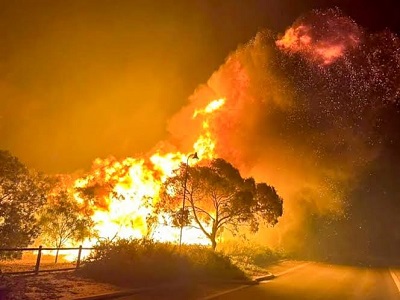
UN Weather Agency says Rising Temperatures and Increasingly Intense Wildfires are Reversing Progress on Cleaner Air, with Serious Implications for Public Health Worldwide.
Enugu Media Village (EMV), the Most Updated Online News Platform | September 7, 2026.
GENEVA — The World Meteorological Organization (WMO) has warned that increasingly intense heatwaves and wildfires are threatening global efforts to improve air quality, as climate change continues to intensify extreme weather events.
In its latest Air Quality and Climate Bulletin, released on Monday to mark the International Day of Clean Air for blue skies, the UN weather agency stressed that air pollution and climate change are closely connected and must be tackled through coordinated policies.
The WMO said extreme fire-smoke events have tripled globally since the 1990s, with one study cited in the report estimating that wildfire smoke contributed to nearly 100,000 additional deaths annually between 2010 and 2018.
The agency particularly highlighted PM2.5, fine particles capable of penetrating deep into the lungs and bloodstream. Wildfire smoke contains a toxic mixture of pollutants, while heatwaves also promote the formation of ground-level ozone, another serious threat to human health.
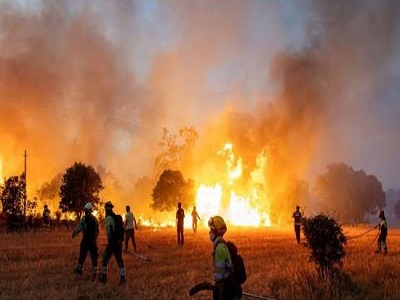
According to the WMO, rising temperatures, stagnant atmospheric conditions and intense sunlight during heatwaves can increase ozone pollution, potentially contributing to tens of thousands of additional premature deaths.
The report noted that PM2.5 concentrations in 2025 were above long-term averages in parts of northern Canada, Russia and western-central Africa, largely because of increased fire activity.
The WMO is therefore calling for stronger monitoring of air pollutants, including fine particulate matter, ground-level ozone, black carbon and atmospheric microplastics, as well as stronger international cooperation on climate and air-quality policies.
The warning comes as countries across different regions continue to experience extreme heat, destructive wildfires and episodes of hazardous air pollution, underscoring the growing connection between environmental change and public health.
For Africa and other vulnerable regions, the developments reinforce the importance of stronger environmental monitoring, early-warning systems, climate adaptation and measures to reduce pollution.
Enugu Media Village (EMV), the Most Updated Online News Platform, continues to monitor major global developments and their implications for Nigeria, Africa and the wider international community.