
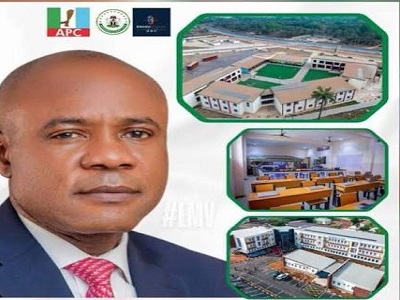
Strengthening Institutions, Empowering Public Servants and Positioning Enugu for Sustainable Economic Transformation.
Media Village | 24th August, 2026.
ENUGU NIGERIA | As Enugu State continues to pursue an ambitious economic transformation agenda, the role of a professional, efficient and forward-looking civil service has become increasingly important. The vision of building a $30 billion economy cannot be achieved through infrastructure and private-sector investment alone; it requires a public service capable of designing sound policies, implementing programmes effectively and delivering quality services to citizens.
A strong civil service is the institutional engine that converts government vision into measurable outcomes. From economic planning and education to healthcare, infrastructure, agriculture, technology and urban development, virtually every aspect of the state’s transformation depends on the capacity of public institutions to perform efficiently.
From Administration to Performance
The modern civil service must move beyond traditional administrative functions and embrace a culture of performance, innovation and accountability. As Enugu positions itself for accelerated economic growth, public servants must increasingly operate as strategic partners in development.

This requires continuous professional development, modern management systems, data-driven decision-making and the effective use of technology. A civil service equipped with the right skills and tools can respond faster to emerging challenges, reduce bureaucratic bottlenecks and create an enabling environment for businesses and investors.
The transition from a conventional bureaucracy to a performance-oriented public service is therefore not merely an administrative reform. It is an economic necessity.
Human Capital at the Centre of Transformation
No economic vision can succeed without investing in the people responsible for implementing it. Building the civil service for a $30 billion economy means developing a workforce that understands contemporary economic realities and possesses the technical expertise required to manage a rapidly changing state.
Training in digital technology, financial management, project implementation, public policy, data analytics, procurement, monitoring and evaluation should become central to the continuous development of civil servants.

Equally important is the creation of a workplace culture that rewards competence, integrity, innovation and results. When public servants understand that their performance directly contributes to the state’s development objectives, government programmes are more likely to translate into tangible benefits for citizens.
Technology and the Civil Service of the Future
Digital transformation must remain a major component of Enugu’s public-sector reform. An increasingly digital economy requires government institutions that can operate efficiently in a digital environment.
E-governance, digital records, automated processes, online public services and data-driven planning can significantly improve efficiency while reducing unnecessary delays and opportunities for administrative leakages.
A technologically empowered civil service can also improve communication between government and citizens, making public institutions more accessible, transparent and responsive.
Building Institutions That Support Investment
A $30 billion economy will require substantial private-sector participation. Investors need confidence that government institutions are predictable, transparent and capable of providing efficient services.
The civil service therefore has a critical role in creating an investment-friendly environment. Efficient approval processes, clear regulations, responsive agencies and effective public infrastructure can make Enugu more attractive to local and international investors.
Every interaction between a government institution and a business can influence investment decisions. Consequently, building a business-friendly civil service is an important part of building a business-friendly Enugu.
Accountability and Public Trust
Economic transformation must also be supported by strong accountability mechanisms. Public resources must be managed responsibly, while government programmes should be subjected to effective monitoring and evaluation.
A professional civil service should understand that accountability is not simply about compliance; it is about demonstrating that public resources are producing public value.
Transparency, ethical leadership and measurable performance can strengthen citizens’ confidence in government and create the trust necessary for long-term development.
Preparing for the Next Generation
The ambition of a $30 billion economy should also be viewed as a long-term institutional project. The systems being established today must remain effective tomorrow, regardless of changes in leadership or administration.
This means building institutions that are driven by policies, standards and professional capacity rather than personalities. It also means attracting young professionals into public service and creating opportunities for them to contribute their skills, ideas and technological knowledge.
The civil service of the future must be dynamic enough to anticipate challenges rather than simply respond to them.
A Shared Responsibility
Building the civil service for a $30 billion economy is ultimately a shared responsibility involving government leaders, permanent secretaries, directors, other public servants, the private sector, professional bodies and citizens.
Government must provide the policy direction and resources required for reform. Public servants must embrace professionalism and continuous learning. Citizens and stakeholders must also demand transparency, efficiency and measurable results.
The objective should be clear: to create a public service that is capable of matching the ambition of Enugu’s economic vision.
Conclusion
The journey towards a $30 billion economy will not be measured solely by the size of investments attracted or the number of projects completed. It will also be measured by the strength of the institutions that sustain those achievements.
A competent, digitally enabled, accountable and performance-driven civil service can provide the foundation upon which Enugu’s economic ambitions are built.
For Enugu Media Village, the conversation is therefore bigger than economic figures. It is about building institutions, developing people and creating a public service capable of delivering the prosperous, competitive and sustainable Enugu that the future demands.
Enugu Media Village,
The Voice of Coal City, Beyond the Headlines!