
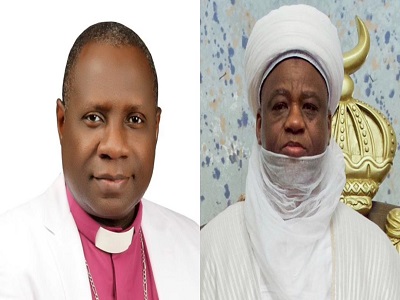
Building Bridges of Peace, Tolerance and Unity Through Shared Values, Mutual Respect and Responsible Citizenship
Enugu Media Village | 22nd August, 2026
ENUGU, NIGERIA — Faith has remained an important part of the social and cultural identity of communities across Enugu State and Nigeria as a whole. Beyond personal spirituality, faith can play a significant role in shaping relationships, promoting compassion and encouraging peaceful coexistence among people of different backgrounds.
In a society as diverse as Nigeria, the values promoted by religious and traditional communities can contribute meaningfully to peace, unity, tolerance and communal development when they are translated into responsible action.
For Enugu Media Village, the conversation about faith must therefore extend beyond individual belief to consider how shared values can contribute to stronger communities.
Faith as a Force for Peace
At its best, faith encourages people to value human life, show compassion and pursue peace.
Religious teachings across different traditions commonly emphasise values such as love, forgiveness, justice, kindness and responsibility.
When these principles are reflected in everyday behaviour, they can help reduce hostility and create an atmosphere where people are more willing to understand one another.
Peaceful communities are not built merely through laws and security measures. They are also built through the values that citizens carry into their homes, workplaces, places of worship and neighbourhoods.
Respecting Differences
Communal harmony does not require everyone to believe the same thing.
Enugu, like many parts of Nigeria, is home to people with different religious convictions, cultural traditions and personal perspectives.
The ability to coexist peacefully despite these differences is a sign of a mature society.
Respect does not mean abandoning one’s convictions. It means recognising the dignity and rights of others and refusing to turn differences into reasons for hatred or discrimination.
When communities learn to disagree without becoming enemies, they create room for cooperation and development.
The Role of Religious Leaders
Religious leaders occupy an influential position within many communities.
Their words can shape attitudes, influence relationships and inspire collective action.
This influence comes with an important responsibility.
Religious leaders can use their platforms to promote messages of peace, discourage intolerance, encourage dialogue and remind followers that faith should never become an excuse for violence or discrimination.
They can also work together across religious lines on issues that affect everyone, including education, poverty, youth development, healthcare, environmental protection and community welfare.
Faith and Community Service
One of the strongest ways faith can promote communal harmony is through service.
When people come together to assist the vulnerable, support families in difficulty, provide educational opportunities or respond to community emergencies, religious differences become less important than the common humanity that connects everyone.
Community service creates opportunities for people to work side by side and discover shared interests and responsibilities.
A food donation, scholarship programme, medical outreach, youth empowerment initiative or community clean-up may appear simple, but such activities can strengthen trust and solidarity.
Forgiveness and Reconciliation
No community is completely free from disagreements.
Families experience disputes. Neighbours misunderstand one another. Communities may face conflicts over land, leadership, politics, business or other interests.
The ability to forgive and seek reconciliation is therefore essential to lasting peace.
Faith can provide moral and spiritual frameworks that encourage individuals to move beyond anger, acknowledge wrongdoing, seek forgiveness and rebuild relationships.
Reconciliation does not mean ignoring injustice. Rather, it creates a pathway through which legitimate grievances can be addressed without allowing conflict to permanently divide communities.
Young People and the Future of Peace
Young people are central to the future of communal harmony.
They are growing up in an increasingly connected world where information, opinions and sometimes harmful messages can spread rapidly through social media.
Young people must therefore be encouraged to distinguish between constructive dialogue and messages designed to create hatred or division.
Faith communities, schools, families and youth organisations can help young people develop critical thinking, empathy, respect and responsible digital behaviour.
The young person who learns to respect differences today is more likely to become the community leader who promotes peace tomorrow.
Women as Builders of Community Peace
Women also play a critical role in maintaining social harmony.
As mothers, educators, entrepreneurs, community organisers and leaders, women influence families and communities in significant ways.
Supporting women to participate meaningfully in community dialogue and peace-building initiatives can strengthen the social fabric of communities.
When women and men work together to address community challenges, the prospects for sustainable peace become stronger.
Beyond Religious Gatherings
Faith should not be confined to places of worship.
Its most powerful contribution to society can be seen in how believers treat other people outside religious settings.
A person who speaks about peace during worship but promotes hatred in the community undermines the very values they claim to represent.
True faith should encourage responsible citizenship — respecting laws, protecting neighbours, helping vulnerable people and contributing positively to society.
Communal harmony begins when values become visible through everyday conduct.
A Shared Responsibility
Building peaceful communities is not the responsibility of religious leaders alone.
Government institutions, traditional rulers, community leaders, parents, educators, security agencies, civil society organisations, businesses and ordinary citizens all have important roles to play.
Government can create fair institutions and provide effective channels for resolving disputes.
Traditional and religious leaders can promote dialogue and responsible conduct.
Parents and teachers can teach children the importance of tolerance.
Citizens can reject rumours, hate speech and actions capable of inflaming tensions.
Together, these efforts can create communities where differences become an opportunity for understanding rather than a source of conflict.
Enugu Media Village: Promoting Conversations That Unite
At Enugu Media Village, we believe the media has an important role in strengthening communal harmony.
Responsible journalism should not only report conflicts; it should also highlight solutions, celebrate peaceful communities and give visibility to individuals and organisations working to build bridges.
Stories of cooperation, compassion and reconciliation deserve attention because they demonstrate that communities can overcome differences when people choose dialogue over hostility.
Enugu’s future depends not only on infrastructure and economic development, but also on the strength of relationships among its people.
Different Faiths, One Community, Shared Future
Faith can be a powerful force for communal harmony when it inspires people to choose compassion over hatred, dialogue over confrontation and service over selfishness.
The diversity of beliefs within our communities should not divide us from our shared responsibility to build a peaceful society.
Ultimately, the strength of a community is measured not by how similar its people are, but by how respectfully they live together despite their differences.
Peace begins with understanding. Harmony grows through respect. And a stronger Enugu is built when its people choose unity over division.
— ENUGU MEDIA VILLAGE