
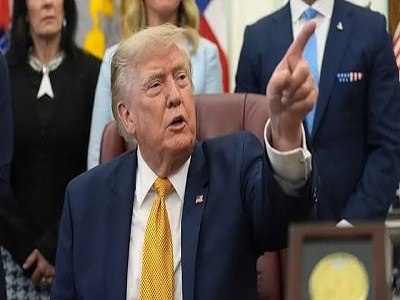
US President Says Iran Faces a Major Decision as Washington and Tehran Remain Far Apart Despite Renewed Diplomatic Efforts.
Enugu Media Village (EMV), the Most Updated Online News Platform | September 24, 2026.
NEW YORK — United States President Donald Trump has warned Iran of severe consequences if Tehran fails to reach an agreement with Washington to end the ongoing conflict, using his address to the 81st United Nations General Assembly to defend US military action against Iran and press for a negotiated settlement.
Addressing world leaders at the UN headquarters in New York on September 22, Trump said he faced a major decision over whether the conflict would end through a peace agreement or continue with further military action. He argued that US operations had prevented Iran from obtaining a nuclear weapon and warned that the consequences for Tehran could become much more severe if no agreement was reached.
Trump presented the situation as a choice between diplomacy and continued confrontation, saying he believed a deal could eventually allow Iran to rebuild its economy and country. At the same time, he issued a stark warning that Washington could intensify its military campaign if negotiations failed.
The US president also suggested that an agreement could be reached after the November 3 American midterm elections, while insisting that his administration remained focused on preventing Iran from acquiring a nuclear weapon.
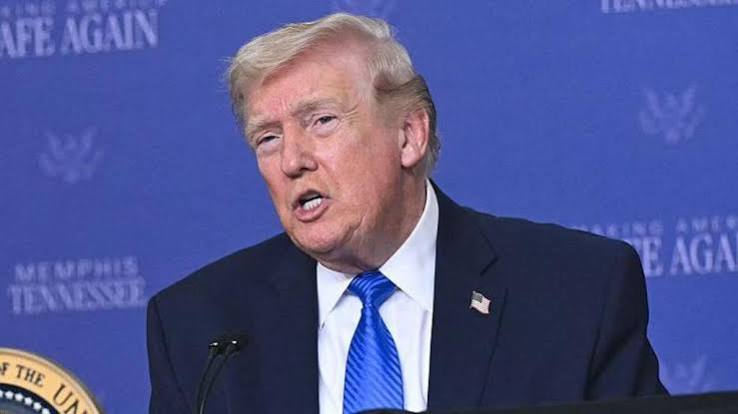
Diplomatic Efforts Continue at UN
Despite Trump’s tough rhetoric, diplomatic efforts to end the conflict have continued on the sidelines of the UN General Assembly.
US envoy Steve Witkoff said American and Iranian representatives engaged in lengthy discussions through mediators during the General Assembly. Trump subsequently described the discussions as productive, although he clarified that his representatives had met with mediators rather than directly with Iranian officials.
Iran has also indicated that it remains open to diplomacy, although Tehran has rejected negotiations conducted under military pressure.
Iranian President Masoud Pezeshkian, speaking at the UN General Assembly on September 23, said Iran would not surrender to pressure but remained prepared to negotiate to end the conflict. He criticised Trump’s threats and described them as reflecting what he called a “bullying mentality.”
Iran Links Strait of Hormuz to De-escalation
The strategically important Strait of Hormuz has emerged as a major issue in the confrontation.
An Iranian official told Reuters that Tehran could reopen the waterway within seven days if the United States eased military pressure and lifted its blockade on Iranian ports. Iran has also communicated proposals through mediators as part of efforts to revive diplomacy.
The Strait of Hormuz is a crucial international energy route, making developments around the waterway important not only to the Middle East but also to global oil and gas markets.
Conflict Raises Global Economic Concerns
The continuing confrontation between Washington and Tehran has already generated wider economic concerns, particularly because of disruptions affecting energy supplies and international shipping.
Reports on September 24 indicated that Brent crude was trading above $105 per barrel amid continuing uncertainty over the conflict and limited evidence of a breakthrough in peace negotiations.
A prolonged confrontation could therefore continue to affect fuel prices, shipping costs, inflation and economies that depend heavily on energy imports.
UN Diplomacy Faces Major Test
The exchange between Trump and Pezeshkian has placed the Iran conflict among the most significant diplomatic issues at the 81st UN General Assembly.
While Washington is demanding an agreement that addresses its security concerns, Tehran maintains that it will not accept terms imposed through military threats. Both sides have nevertheless left room for diplomacy, creating a complex situation in which negotiations and military pressure are continuing simultaneously.
The immediate question is whether mediators can narrow the differences between the United States and Iran and establish conditions for a ceasefire and broader peace agreement.
For the international community, the developments have heightened concerns about further escalation in the Middle East and the potential consequences for regional stability, global energy markets and international security.
As diplomatic contacts continue, attention remains focused on whether Washington and Tehran can move from threats and military confrontation toward a negotiated settlement.
Enugu Media Village (EMV) — Informing Enugu, Connecting the World; Promoting Accountability, Public Participation, Transparency and Good Governance.