

How the Mbah Administration’s Primary Healthcare Investment Is Taking Modern Health Infrastructure Closer to Communities.
Enugu Media Village (EMV), the Most Updated Online News Platform | September 22, 2026.
Access to quality primary healthcare is one of the clearest measures of how government investment translates into everyday benefits for citizens. Across Enugu State, the ongoing transformation of primary healthcare infrastructure under the administration of Governor Peter Ndubuisi Mbah has placed renewed attention on healthcare delivery at the community level.
One of the administration’s major interventions is the construction and upgrade of 260 Type-2 Primary Healthcare Centres across the state’s 260 political wards.
The initiative is designed to bring modern healthcare facilities closer to residents, particularly people in communities where access to properly equipped primary healthcare has historically been a challenge.
According to a May 2026 report by Premium Times, the state government was undertaking the project across the 260 wards, with each facility designed to include essential infrastructure such as staff accommodation, solar power, laboratory equipment and other facilities required for healthcare delivery. The report quoted the Enugu State Government as putting the construction cost at about ₦24 billion, excluding subsequent equipment expenditure.
BEYOND BUILDINGS: EQUIPPING THE FACILITIES
The significance of the programme goes beyond constructing physical structures.
In April 2026, the Secretary to the Enugu State Government, Prof. Chidiebere Onyia, said the government had approved approximately ₦4 billion to equip 100 of the PHCs, as the administration moved from construction towards making the centres operational.
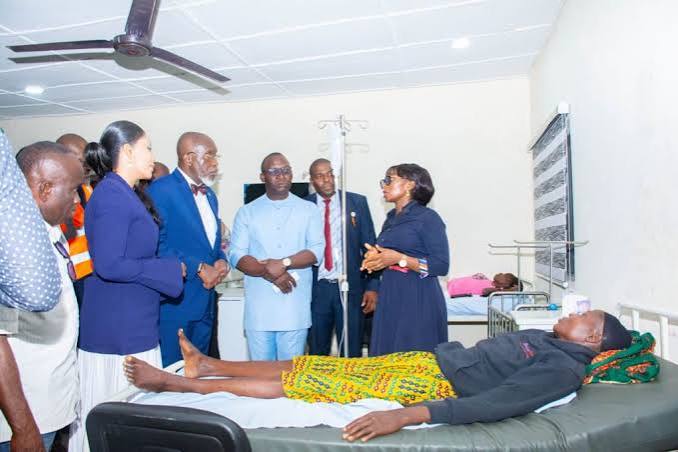
Governor Mbah also stated in April that the administration was working towards having the 260 Type-2 PHCs fully operational, while additional investments were being made in equipment and healthcare infrastructure.
This distinction is important. A modern healthcare centre only delivers its intended impact when infrastructure is matched with equipment, qualified personnel, medicines, electricity, water and effective management.
PRIMARY HEALTHCARE AND MATERNAL HEALTH
Primary healthcare is particularly important for pregnant women, newborns and children because many health emergencies can be prevented or addressed when communities have timely access to appropriate services.
A 2026 report on Enugu’s primary healthcare performance noted improvements in several indicators, including routine immunisation, skilled birth attendance and healthcare utilisation. The report stated that Enugu had 566 primary healthcare centres, while 260 facilities had been upgraded to Type-2 PHCs.
The same report said health-facility attendance peaked at 176,009 visits in February 2026, before falling to about 130,000 in March, illustrating both increased utilisation and the continuing need to strengthen consistent access to services.
These figures provide an important perspective: healthcare transformation should ultimately be measured not simply by the number of buildings completed, but by whether residents are receiving more accessible, reliable and effective healthcare.
FROM INFRASTRUCTURE TO HUMAN CAPACITY
Healthcare infrastructure requires personnel to function.
The 2026 primary healthcare performance report said the state had approved the recruitment of 2,200 health workers, with more than 450 already deployed across primary healthcare facilities at the time of the report. It also reported the introduction of a doctor-led PHC management model at the local-government level.
In a separate April 2026 report, the Medical and Health Workers’ Union of Nigeria commended the administration for healthcare-sector investments and cited recruitment, staff welfare and training among the measures it associated with the administration’s health reforms.
For the communities that these facilities serve, the practical question remains straightforward: Can a resident walk into a nearby health centre and find the personnel, equipment and services required at the point of need?
That is ultimately where the success of the programme will be measured.
A COMMUNITY-LEVEL TRANSFORMATION
The emerging impact can already be seen in some local government areas.
In Nsukka Local Government Area, for example, The Guardian reported in August 2026 that 20 Type-2 PHCs were being provided across the area’s 20 political wards, with several reported to be about 90 per cent complete at the time. The report also described an already functional facility at Ihe Nsukka with solar power, a borehole, laboratory facilities, oxygen, maternity services, medical equipment and staff accommodation.
Such examples illustrate the intended model: healthcare infrastructure that is not concentrated only in major urban centres but distributed across communities.
THE NUMBERS BEHIND THE INVESTMENT
The 260 Type-2 PHCs form part of a much broader infrastructure programme.
In September 2026, the Enugu State Government unveiled a compendium documenting more than 10,000 reported milestones of the administration, including 260 Type-2 PHCs, more than 1,521 kilometres of roads and more than 7,000 classrooms.
The healthcare component therefore represents one part of a wider development strategy that links infrastructure, human capital and economic development.
Governor Mbah has repeatedly connected healthcare investment with the administration’s broader economic objective, arguing that a healthy population is essential to building a productive workforce and growing the state’s economy.
WHAT REMAINS TO BE DONE?
While the scale of the PHC programme is significant, the next phase is equally important.
The state will need to sustain equipment procurement, staffing, medicines and consumables, maintenance, electricity and water supply, as well as effective monitoring of service delivery.
The 2026 primary healthcare report also identified immunisation gaps in some local government areas, showing that infrastructure alone cannot eliminate every healthcare challenge.
This means the real test of the 260 Type-2 PHCs will be their long-term ability to deliver measurable improvements in maternal and child health, immunisation, emergency response, disease prevention and general healthcare utilisation.
THE BIGGER PICTURE
The 260 Type-2 PHCs represent an attempt to shift primary healthcare from being primarily about the existence of facilities to being about functional, accessible and community-centred healthcare delivery.
For residents, the value of the programme will ultimately be found in practical outcomes: shorter distances to healthcare, better-equipped facilities, qualified health workers, improved maternal and child services and quicker access to essential medical attention.
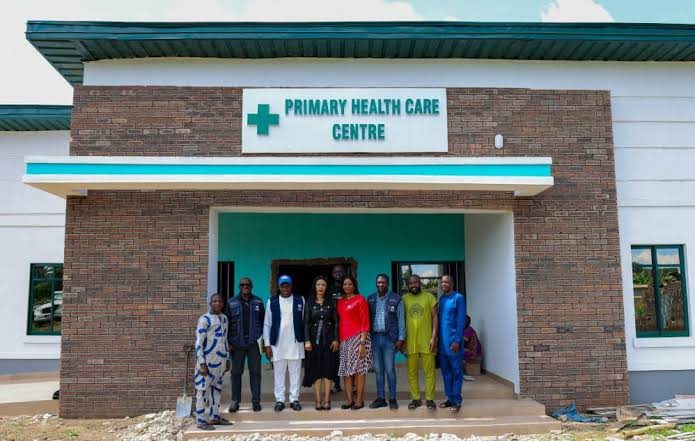
As Enugu continues its wider development programme, the sustainability and effectiveness of these healthcare investments will remain an important indicator of how infrastructure translates into improved quality of life.
For an administration seeking to demonstrate its record to the electorate, the most meaningful evidence will therefore not only be the number of facilities constructed, but the measurable health outcomes and services those facilities deliver to the people of Enugu State.
Enugu Media Village (EMV), the Most Updated Online News Platform — Informing Enugu, Connecting the World; Promoting Accountability, Public Participation, Transparency and Good Governance.