
Beyond Politics: Why Continuity of Leadership Could Accelerate Nigeria’s Renewal and Enugu’s Transformation.
Enugu Media Village (EMV), the Most Updated Online News Platform | September 14, 2026.
ENUGU — Elections are ultimately about choices, but responsible choices should be guided by evidence, performance and the long-term interests of the people. As Nigeria approaches the 2027 general elections, the records of President Bola Ahmed Tinubu at the federal level and Governor Peter Ndubuisi Mbah in Enugu State provide a basis for a serious conversation about continuity in leadership.
The argument for giving both leaders a second term should not simply be about political loyalty. It should be about whether the foundations they have laid deserve the opportunity to be consolidated, improved and taken to the next level.
For President Tinubu, the central argument is that his administration embarked on difficult economic reforms designed to change the structure of Nigeria’s economy and public finances. For Governor Mbah, the case is even more visible at the state level, where his administration has pursued an aggressive infrastructure, education, healthcare, security and economic transformation programme.
Tinubu and the Case for Continuity
President Bola Ahmed Tinubu assumed office at a time of significant economic pressure, including fiscal constraints, distorted incentives and longstanding structural challenges. His administration’s removal of the petrol subsidy and foreign-exchange reforms generated substantial hardship for many Nigerians, and those consequences cannot be ignored.
However, the other side of the reform debate is equally important.
The Federal Government argues that the reforms have improved fiscal capacity, strengthened macroeconomic management and created a foundation for greater investment. By the second quarter of 2026, Nigeria’s economy recorded 4.43 per cent year-on-year growth, compared with 3.89 per cent in the first quarter.
This does not mean that Nigeria’s economic problems have disappeared. They have not. Inflation, unemployment, insecurity and the cost of living remain major concerns.
But economic restructuring is rarely completed within a single political cycle.
The question before Nigerians is therefore whether the country should abandon the direction of reform or give the administration another term to consolidate the gains, correct weaknesses and translate improving macroeconomic indicators into tangible improvements in household welfare.
The Tinubu administration has also placed emphasis on infrastructure, agriculture, industrial development, human capital and ward-level development under its Renewed Hope framework. Government planning documents identify economic growth, human capital development, food security, infrastructure and governance reforms among the administration’s priorities.
A second term could therefore provide the continuity required to move from economic stabilisation to broader prosperity.
Mbah and the Transformation of Enugu
In Enugu State, the argument for continuity is anchored more directly in physical projects and institutional reforms.
Governor Peter Mbah’s administration recently unveiled a compendium documenting more than 10,000 milestones across different sectors. According to the state government, the record includes more than 1,521 kilometres of constructed and reconstructed roads, 7,000 classrooms and 260 Type-2 Primary Healthcare Centres, alongside projects such as Enugu Air and the New Enugu Smart City.
These are not merely statistics. Infrastructure determines how people move, trade, access healthcare, attend school and participate in economic activity.
The administration’s education programme is particularly significant. Its 260 Smart Green Schools initiative is designed to place modern educational infrastructure across the state’s 260 wards and equip young people for a technology-driven economy.
Similarly, the rollout of 260 Type-2 Primary Healthcare Centres seeks to ensure that residents can access basic healthcare closer to their communities rather than travelling long distances for essential services.
The logic behind these programmes is straightforward: development should not be concentrated only in the state capital. It should reach the wards, communities and ordinary households.
From Roads to an Investment-Driven Economy
Perhaps the most ambitious element of the Mbah administration is its attempt to reposition Enugu from a largely public-sector-oriented economy into a competitive investment and production hub.
The administration has maintained a target of growing the state’s economy from about $4.4 billion to $30 billion and has pursued investments in manufacturing, agriculture, technology, tourism, transportation and other productive sectors.
The launch of a $20 million Haier factory in Enugu in 2026 is one example of the administration’s investment strategy, with the state government saying the project is expected to generate employment, support technology transfer and strengthen local industrial capacity.
This is where continuity becomes important.
Large-scale economic transformation does not happen overnight. Roads must connect production centres to markets. Schools must produce skilled workers. Healthcare must support a productive population. Security must protect investment. Airports and transportation networks must improve connectivity. Industries must have reliable infrastructure and an enabling business environment.
These elements require sustained policy implementation rather than frequent changes in direction.
The Tinubu-Mbah Development Partnership
Another reason supporters can make a case for continuity is the emerging alignment between the federal and Enugu State governments.
President Tinubu has publicly commended Governor Mbah’s development efforts, describing the work in Enugu as important to democratic growth and human development.
For Enugu, a cooperative relationship between the state and federal governments can potentially accelerate major projects, improve access to federal infrastructure and attract greater investment.
At a time when governments need to work across political and institutional boundaries, maintaining productive federal-state collaboration can be economically valuable.
Second Terms Should Be About Consolidation, Not Complacency
Supporting a second term should not mean giving any government a blank cheque.
On the contrary, a second term should come with greater expectations.
For President Tinubu, Nigerians should demand stronger action on the cost of living, employment, security, electricity, food production and the translation of economic reforms into improved living standards.
For Governor Mbah, the people of Enugu should expect the completion and effective maintenance of ongoing projects, deeper industrialisation, more jobs, improved healthcare outcomes, stronger education, greater transparency and measurable progress toward the state’s economic targets.
Continuity must therefore be accompanied by accountability.
The argument is not that every policy has been perfect. Neither government is beyond criticism. Rather, the argument is that where a government has established significant programmes and embarked on long-term structural reforms, there is value in allowing those programmes sufficient time to mature—provided citizens continue to demand results.
The Choice Before the Electorate
The 2027 elections will ultimately belong to the people.
Voters will assess the roads they drive on, the schools their children attend, the hospitals they visit, the security they experience, the jobs available to them, the cost of living and the opportunities created for the next generation.
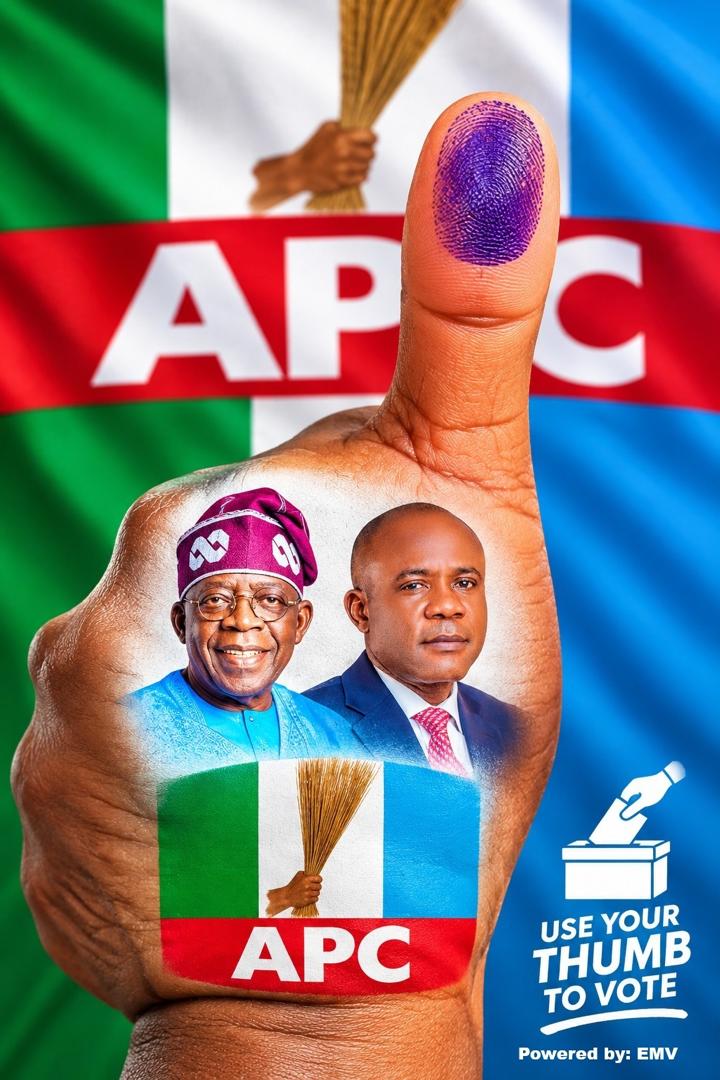
For supporters of President Tinubu and Governor Mbah, the case for re-election is therefore fundamentally a case for continuity of development.
It is the argument that Nigeria should consolidate its economic reforms rather than repeatedly restart the process, while Enugu should continue building on its ongoing infrastructure and economic transformation rather than interrupting programmes that require several years to reach their full potential.
The strongest mandate is not built merely on political slogans. It is earned through measurable delivery.
If President Tinubu continues to strengthen the economy while addressing the hardships confronting citizens, and if Governor Mbah continues to deliver measurable improvements while deepening accountability and inclusive development, both men will have a compelling case to present to the electorate.
Ultimately, the decision belongs to Nigerians and the people of Enugu State.
But in a democracy, continuity can be justified when it is accompanied by performance, accountability and a credible vision for what comes next.
For Nigeria, the task is to turn reform into prosperity.
For Enugu, the task is to turn transformation into a sustainable and inclusive economy.
And for the electorate, the responsibility is to judge both leaders not merely by promises made, but by results delivered and the future they offer.
Enugu Media Village (EMV), the Most Updated Online News Platform, remains committed to promoting informed public discourse, accountability, public participation, transparency and good governance as Nigerians prepare for the 2027 elections.